Dr. Norman Wong Articles as posted to the Bullseye List

Home

Camp Perry National Matches - 2004
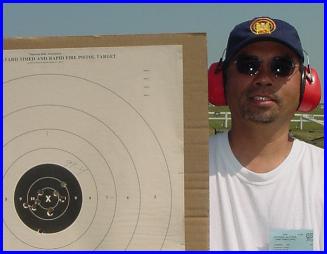
Dr. Wong shows a pretty fine .45 target

Norman Wong, O.D., has been kind enough to provide several articles and posts regarding vision, to the Bullseye Shooting Community, through the avenue known as the Bullseye-L Internet Forum. Because the older archives are no longer available and to provide a consolidated source, some of his topics have been placed here.

[Note: To the right is a picture of Dr. Wong's shooting success at the 2004 National Matches. There's also a Team picture from his Navy days at the bottom of this page.]

Onward to his words of wisdom. Thanks Dr. Wong!

Page Contents:

  • BULLSEYE SHOOTERS' GUIDE FOR THE EYECARE PROFESSIONAL
  • ABBE Values
  • Inaccuracies with Eyeglass Prescriptions
  • Eye Exam with Eyechart at 20 feet vs. 50 yards or 1,000 yards
  • Red Dot Focusing Position
  • Use of Obsolete Prescription Eyeglasses as Shooting Glasses
  • Keeping Focused
  • Shooters' Eye Dominance and Suppression, Sighting with Dot Scopes
  • Sight Fading, Troxler Effect and Oxygen Deprivation
  • To Occlude or not to Occlude
  • The Ideal Pupil
  • Suspicious Pupils
  • Shooters with Ocular Migraines
  • Lutein
  • Amblyopia (Lazy Eye), Our Future Bullseye Shooters
  • (Doc Wong's) Non Glare, Concentric Ring, Anti-Parallax Red Dot Scope Enhancer
  • Health Warning, Protect Your Eyes
  • Target Image Size Through The Red Dot Scope
  • Results of the Red Dot Position Survey
  • An Insight to "20/20"
  • Ocular Lubricants for Shooters
  • What Are Floaters?
  • Nutrition and Eye Health
  • Iron Sight Visual Perception Under The Open Sun
  • VERTEX DISTANCE, Optimum Vision or not? (How your shooting glass Rx may be affected) (added Feb 2010)

    -#-#-#-#-#-#-#-#-#-#-#-#-#-#-#-#-#-#-#-#-#-

    BULLSEYE SHOOTERS' GUIDE FOR THE EYECARE PROFESSIONAL

    Clark Hardesty, Airline Pilot
    John Ciccone, Communications Director for the Ophthalmic Surgical Society and Writer
    Thomas Gettman, M.D., Retired Anesthesiologist
    Dr Wong with Clark Hardesty
    Dr Wong with John Ciccone
    Thomas Gettman, M.D.
    Airline Pilot
    Comm Director for the
    Retired Anesthesiologist
    Ophthalmic Surgical Society
    and Writer

    Note: For a .pdf copy of this article click here.

    Dear Colleague:

    My name is Norman H. Wong, O.D. and I am a member of the California Optometric Association and the American Optometric Association. I am also a veteran, a life-member of the NRA and a competitive shooter in the sport of Conventional Pistol, known to its adherents as “bullseye shooting.” In bullseye shooting, competitors fire one-handed at paper targets from distances of 25 and 50 yards (50 feet during the indoor season) under exacting time constraints: In the most extreme instance, five shots must be placed on the paper within 10 seconds, while the slow-fire phase allows shooters as much as 10 minutes in which to make 10 shots. At the upper levels of competition, a millimeter or two of accuracy can make the difference between winning and simply placing in the top twenty. Like golf, bullseye shooting is a sport in which incremental improvements in equipment, technique and consistency can result in vastly improved scores.


    Brooks Gelfand, Retired Computer Programmer

    My reason for writing is that many bullseye shooters have told me that, while their day-to-day eyewear is often fine for conventional use, shooting glasses prescribed by the same eyewear professional often leave something to be desired. I believe this situation can be alleviated with a bit of guidance from someone familiar with the shooting discipline, so I hope you will not mind if I pass along some advice in the form of this document.


    Bob Fleming, Technician

    Bullseye shooters are a wonderful and convivial group of individuals with critical visual needs. I urge you to set aside any political views against firearms and treat the bullseye shooter as you would any other patient.

    The patient will ask, or has asked, for permission to bring his/her pistol(s) and/or revolver(s) to the office for the eye examination and will demonstrate that the firearm is unloaded and safe to handle. If permission was denied, sighting parts of the equipment were brought instead. Please take a moment to review the following important steps before and during your eye examination. Besides your routine health tests of the eyes, I have emphasized a few areas of concern. Your kind attention to these details would be most appreciated.


    Red Dot Scope and Iron Sights

    EYE EXAMINATION

    1. CASE HISTORY: A thorough case history revealing any medical problems relating to eye health and vision stability is essential. Note all medications taken, including over-the-counter medications, and advise of possible visual side-effects.

    2. DOMINANCE: Review and confirm eye- and hand-dominance.


    Verifying refraction in a more natural setting and distance

    3. REFRACTION: Your best effort is needed to obtain the most accurate results. After you obtain your best distance Rx, see if the patient is sensitive to 0.12 diopter steps. Please double-check vertex distances especially for higher powers. Check to see if the patient's line of sight is "continually" centered through the phoropter lenses. Do not reduce the full strength of the prescription even if there was a large change from the previous examination results. Small prescriptions such as +0.25, -0.25 diopter sphere and +0.25, -0.25 diopter cylinder, even if obliquely orientated, may be significant to the bullseye shooter.

    4. RED DOT SCOPES: For decades, the sport of bullseye shooting was conducted almost exclusively with conventional, open sights (also known as “iron sights”). An issue with iron sights is the impossibility of keeping the front sight of the pistol and the bull of the target (the black center portion) in focus at the same time. Because of this, shooters in recent years have adopted the use of 1X “red dot” scopes, which superimpose an illuminated dot on the image of the target and allow simultaneous focus. Normally, the best lens for the red-dot scope viewing will be the best distance prescription. Demonstrate this lens while the patient looks at the red dot while holding out the scope. Because the red dot in the scope is not focused at "optical infinity" (it is closer), try a +0.12 or a +0.25 diopter lens over the best distance prescription to see if the dot becomes even clearer. If possible, judgment would be best if the patient can view at a distance greater than the standard 20 feet and with outdoor lighting. If the dot is distorted, use the phoropter once again to verify cylindrical power and axis as the patient holds the pistol (or scope only) in front of the phoropter. Final results should be demonstrated with trial lenses. If the red dot never becomes clear and round after all lens possibilities have been demonstrated, then a careful determination of ocular health involvement needs to be assessed.

    Revolver and .45 Cal Auto with Iron Sights
    Clearsight Attachment for use with Iron Sights

    5. IRON SIGHTS: Iron sights are still preferred by some competitors and are mandatory in certain forms of competition. With iron sights, we are concerned with three separate entities, the clarity of the front sight, the clarity of the rear sight and the relative blurriness of the bullseye. These three positions cannot be focused simultaneously with just a lens. The rear sight is separated from the front sight by about 6 3/4 inches in most standard model-1911, .45-caliber pistols. Measure the EXACT distance from the patient's shooting eye to the rear of the front sight while he/she is in the proper stance. Write this down for the patient's record. Set this distance for the reading card on the rod of the phoropter. Find the best lens for this position and then try 0.12 diopter higher and 0.12 diopter lower and note if the patient responds to this small change. Presbyopic patients will give good responses. For the pre-presbyopes, low power lenses may allow for a more stable focus. Younger patients (those under 35 years of age) may benefit from a minimal plus power for a steadier focus, or perhaps none at all.

    Knobloch Shooting Glasses
    Champion Shooting Glasses

    The patient needs to know the best plus lens because there are specialty type shooting glasses available with interchangeable lenses. The two popular ones are Knobloch Optik and Neostyle Champion systems which include lenses, occluders, apertures and side blinders. There are a number of lenses available with these systems (+0.50, +0.75, +1.00, +1.25, +1.50). The base lens (patient's distance prescription) can be custom made at the optical lab to incorporate into this system. A cylindrical lens must have an edge marking to coincide with an edge marking on the round lens holder. This would alert the shooter if the lens rotates within the holder and may cause blurriness and distortion.

    Interchangeability allows for a quick change when different powers are needed for various shooting distances and lighting conditions. Personally, my best lens for the front iron sight stays the same under day and night lighting situations. In my case and in many other patients', we prefer a dedicated pair of shooting glasses for the iron sights, which may also be helpful as a computer Rx and for other hobbies at a similar working distance.


    Trial Lenses

    Next, have the patient view this best lens with the pistol in hand at a distance greater than 20 feet, and if possible, outdoors at 25 and 50 yards. It is understood that the majority of offices may have limitations in this regard. Depending upon a few factors such as arm length and pupil size, typical lenses that work best are +0.50, +0.75 and +1.00 diopter over the best distance prescription, but also try +0.37, +0.62 and +0.87 diopter lenses, even though these are uncommon powers. You may be surprised how sensitive some shooter's eyes are. In my case, +0.75 diopter is my ideal lens. A +0.62 diopter lens blurs the rear sight and a +0.87 diopter lens blurs the bullseye too much.

    Merit Optical Attachment
    Placement of Aperture
    Gehmann Iris
    Beware of poor fit with thick lenses

    Experienced shooters would know that the distance bullseye will be out-of-focus. As different lenses are tried, this will allow the patient to compare the relative blurriness to the bull. Stress that front iron sight clarity is more important than bull clarity. Most shooters know that an adjustable aperture will then help clear the bull. When too much emphasis is given to the bull clarity, then rear-sight clarity will be compromised. The patient will always shoot better if the front and rear sights are perfectly clear and aligned while the bull is blurred, as opposed to a clear bull with sights that cannot be seen well enough for proper alignment. Always use the lowest plus-power lens to achieve this goal.

    As a quick reference guide, here are the focal lengths of the powers discussed:

  • +0.37 diopter: 2.66 meters
  • +0.50 diopter: 2 meters
  • +0.62 diopter: 1.6 meter
  • +0.75 diopter: 1.33 meter
  • +0.87 diopter: 1.14 meter
  • +1.00 diopter: 1 meter

    Lens determination by focal lengths alone may cause erroneous results. Use these only as a starting point.

    6. BINOCULARITY: Advise the patient if there are any binocular problems which may affect focusing stability. Most shooters occlude one eye but some shoot with both eyes open and suppress the non-dominant eye. Hyperopic patients who are esophoric may have more of a difficult time if eyeglasses are not worn. Again, low power lenses need to be prescribed if the patient desires clear and stable focus.

    7. CORNEA: Carefully inspect for any corneal defects including beginning signs of keratoconus. Note and advise the patient of any old scars and dystrophies along the visual axis that may compromise the focus of the red dot. Check corneal curvatures with the keratometer, or use corneal topography for irregularities. Check the tear film and advise of any possibility of dry eyes, which may cause unstable focus. Recommend dry-eye therapy as needed; use of ocular lubricants may be beneficial before and during shooting.

    8. LASIK and RADIAL KERATOTOMY: Foreign matter introduced in the interface and other complications during LASIK procedure may or may not affect vision. Advise accordingly. Irregular astigmatism may result from radial keratotomy and distort the red dot. Frequently, we will have an undercorrection or an overcorrection after surgery and the full lens prescription needs to be given.

    9. CONTACT LENSES: Patients correctable to 20/20 or better frequently see only 20/25, 20/30, or worse with contact lenses. This may be due to small uncorrected astigmatism, contact lens surface deposits, or desiccation of the soft lens material. Contact-lens lubricants may help when used before and during a match. A shift in vision may be noted when toric contact lenses rotate. These minor problems may be acceptable to the patient.

    10. PUPILS: Note if the patient's pupil is unusually small or large. A small pupil will allow for a longer depth-of-focus but may cause more symptoms with lenticular opacities. A wide pupil will cause a short depth-of-focus and will make it a little more challenging to find the best lens possible. As the amount of ambient light changes throughout the day, the pupil size will also change and may give different sighting appearances. Inspect the iris for colobomas and for trans-illumination defects that can cause diplopia and glare.

    11. CRYSTALLINE LENS: Note and advise the patient of any lenticular opacities which may affect the viewing of the sights. Commonly seen opacities that may not affect non-shooters will affect the shooters' clarity of the red dot or iron sights. Senior patients who have had intra-ocular implants need to be closely inspected for signs of posterior capsular opacities.

    12. MACULA: Closely inspect the macular area for any signs of defects including ARMD. Use of Amsler Grid may be helpful.

    EYEGLASS SELECTION


    Lens Materials

    1. LENSES: Review past lens types and materials used. Discuss what has worked and what has not. Review ABBE VALUE of various lens materials and possible distortions especially in higher powers. Polycarbonate is the only FDA approved safety material that is widely used today and is always recommended as the first choice. Other materials may be used ONLY with the patient's understanding that they are not approved safety materials. If needed, the patient may be required to sign a waiver of responsibility. Many patients choose to have a dedicated pair of shooting glasses, which should be polycarbonate, and employ other materials for their dress eyeglasses. Note that Knobloch Optik and Neostyle Champion lenses come only in CR-39 plastic. When writing up the lab order, request for "exact power required" and reject lenses that are not .

    2. EYEGLASS FRAMES: Frames should not be too small and flimsy (such as rimless). Safety frames following ANSI standards would be best. Wrap-around style frames may require steeper base curve lenses, which may cause distortions. Some sports frames with a one-piece curved front shield may have inserts, which will allow for the patient's prescription lenses. These goggle-type frames have no adjustability, important with moderate to high prescriptions. Being that there are four surfaces in such eyewear, fogging and cleaning may be a problem.

    3. MULTI-FOCAL HEIGHT MEASUREMENTS: Have the patient demonstrate their head posture while at their "shooting stance" as you take the proper height measurements. Extreme diligence needs to taken so that the line of sight is not impeded by the near or intermediate portion of the lens. When measured correctly, there should be no restrictions with bifocal, trifocal and progressive lenses. Verify that the measurement taken with the shooting stance is also compatible with the patient's normal daily use.


    Anti-Reflection Coating

    4. ANTI-REFLECTION COATINGS and ULTRAVIOLET COATINGS: Discuss the advantages of AR coatings which will reduce glare as well as reflections and UV coatings for blocking harmful UV rays of the sun.


    Tint Samples to View in Actual Environment

    5. TINTS: Kalichrome (yellow) enhances contrast but offers very little shading and may be helpful in low light settings. PLS 530 (orange) and PLS 540 (orange-brown) are tints that block all wavelengths above their stated levels. I have found that it is best for the patients to view tint samples and have them report what they find most comfortable. Transitions photochromic lenses lighten and darken with the amount of direct sunlight and their use is very convenient. Avoid "fashion tints" with no protective qualities. If possible, loaning samples for the patient to view at the range would be most helpful.


    Kenneth Bugg, Carpenter. Many Pistol Sportmen also enjoy Rifle Shooting Sports

    I am constantly learning more of the bullseye shooter's needs as I continue to participate in this rewarding sport, and have been revising and adding onto this list. I will, from time to time, update this list as needed, so successive patients may come in with guidelines that differ slightly from these. A check of the version date (under my name, below) will tell you which are the most recent guidelines.

    Bullseye shooters are intelligent, honest, law-abiding citizens with great depth of character. You will now have a very happy patient and should you care to see the product of your work in action, we invite you, your family and friends to join us and see what BULLSEYE SHOOTING is all about.

    National Matches at Camp Perry, Ohio
    All the Hard Work Pays Off
    Photos of Camp Perry by Clark Hardesty

    Regards,
    Norman H. Wong, O.D.Co-edited by Ed Hall and Tom Morrisey
    10/05

    -#-#-#-#-#-#-#-#-#-#-#-#-#-#-#-#-#-#-#-#-#-

    ABBE Values

    Greetings Shooters,

    Have you ever experienced the following? You had a thorough eye examination by your Optometrist or Ophthalmologist and purchased a new pair of eyeglasses with all the bells and whistles. Of course, you had expectations of seeing like an eagle. You put on the new eyeglasses and did not focus very well and worse yet, you felt a little dizzy. Your immediate thoughts were, "The lab made my eyeglasses wrong!," " I messed up during the eye exam!," or "The doctor is a quack!" A fourth possibility may be the ABBE Value of your eyeglass lenses.

    Different lenses have different properties. The density, known as the index of refraction, will vary from one material to another. The ABBE Value will also be different for the various materials. ABBE Value is a number given to quantify the amount of chromatic aberration of a specific ophthalmic lens material. Chromatic aberration occurs when white light is broken up into component colors. A color fringe may be noted around a light source or around an object. In reality, my patients never complain of color fringes, but rather, complain of blurriness and peripheral distortion.

    Here is a list of ABBE Values. With a higher number, there is less aberration. With a lower number, there is more aberration.

    MATERIAL INDEX ABBE VALUE
    Crown Glass 1.523 59
    High Index Glass 1.60 42
    High Index Glass 1.70 39
    Plastic CR-39 1.49 58
    Mid Index Plastic 1.54 47
    Mid Index Plastic 1.56 36
    High Index Plastic 1.60 36
    High Index Plastic 1.66 32
    Trivex 1.53 43
    Polycarbonate 1.58 30

    Ernst Abbe was a brilliant German mathematician and physicist who developed this rating system. Carl Zeiss was so impressed with Ernst Abbe that he was hired by Zeiss in 1866 and eventually became the owner of the company. Different manufacturers may have a different ABBE Value for the same exact lens material. Crown glass is most commonly used for eyeglass lenses with an index of refraction of 1.523. There are, however, 50 glass formulations used today for various optical applications, all with their unique properties. Perhaps this may be one of the explanations as to why there are different qualities to our scopes.

    Polycarbonate lenses are used extensively for safety eyewear such as in our shooting glasses and have the lowest ABBE Value (most aberration). Note that crown glass has the highest ABBE number (least aberration). I've communicated with shooters who thought that their lenses made out of glass seemed to provide the best focus. High index glass has more aberration than standard crown glass. The higher the index of refraction, the denser the material and therefore a thinner lens. Cosmetically, thin lenses appear more attractive but have more aberration.

    You might want to print out this list and refer to it when you purchase your next pair of eyeglasses. Despite the ratings, I must emphasize that most of us may see just as well with low ABBE Value lenses as compared to high ABBE Value lenses. I would always recommend polycarbonate as the first choice of materials for our shooting glasses because of its safety characteristics. For your everyday lenses used under non-hazardous conditions, the chart may prove to be very useful. An informed shooter is a better shooter.

    Good Vision and Good Shooting To All,

    Norman H. Wong, O.D.

    -#-#-#-#-#-#-#-#-#-#-#-#-#-#-#-#-#-#-#-#-#-

    Inaccuracies with Eyeglass Prescriptions


    Greetings Shooters,

    After communicating with some shooters, I thought that "Inaccuracies with Eyeglass Prescriptions" would be an important topic for bullseye shooters. We've discussed supplements to improve cellular structure in the retina. We've discussed ABBE VALUE which may account for lens distortion in our eyeglasses. We've discussed PRESBYOPIA which affects our iron sight vision. We've discussed pupil size as well.

    With all this wealth of information, some of you may still be unsatisfied with your vision, and rightly so. No matter how meticulous your eye examination, if your prescription eyeglass lenses were made poorly, your eyesight will not be optimum.

    First, as a review, let us consider the eye exam. As long as you, as the patient, do your part correctly, we can decrease the variables. Do not close the opposite eye while being tested through the phoropter (the machine with all the lenses). Do not squint your eyes when viewing the different lenses. Be sure to look through the center of the phoropter lenses and not drift your line of sight towards the edge. Stop when your eyes are tearing. Let the eye care professional know your medical background and all medications, including over-the-counter medicines. Beware of the eye doctor, no matter how reputable, who uses technicians relying on automated instrumentation for verification of your eyeglasses and for your refraction. (Easier to use for the limited trained but could be inaccurate).

    As bullseye shooters, I believe we have more acute needs than the average individual. In the vast majority of eye exams, the doctor checks your eyesight in 0.25 diopter increments. For some of us however, our exact prescription may fall in between these increments and our final prescription may be a rounding off value, and could be 0.125 diopter off. Most patients may not see this difference, but some may. To compound this error, the accepted standard of tolerance by the optical industry is + or - 0.125 diopter of your exact prescription. This is known as the ANSI standard. In other words, your eyeglass lenses may be wrong, but it may be considered "close enough." If the exam was 0.125 diopter off and the lenses were made 0.125 diopter off, then we may be 0.25 diopter in total error at this point, and yet, this scenario is not given a second thought or even contemplated by most people in the eyecare profession.

    The optical centers of both lenses must align with our eyes otherwise there will be induced unwanted prism in our prescription. It is possible for the lenses to be misaligned vertically, horizontally or a combination of both. Some may tolerate this prism while others may experience eyestrain and occasional double vision. If you could never adjust to a pair of eyeglasses in the past, don't blame yourself. It just may be poor craftsmanship.

    Let us now consider the location of service. "You get what you pay for!" holds true for everything we encounter in day to day life and eyeglasses are no different. With optical locations offering quick turn-around time such as one hour service or one day service, the emphasis is on quickness and not as much on accuracy. With locations offering low prices, the emphasis is on cost and less on accuracy. With lower profit margins, borderline Rx's will probably be given to the patients and not be redone to the exact requirements. In some locations, the lenses are not even verified for accuracy before given to the patient. This is not to say all work is done poorly, only a greater chance. I've seen lenses substituted when the exact power was not in stock. I've also frequently seen the lenses mounted reversed, that is, the right lens on the left side and left lens on the right side. I speak from past experience with the hopes of enlightening my fellow shooters to understand what may happen "behind the scenes" of the bright lights and mirrors of the showroom.

    For those of you who think you are getting your proper lens Rx when filling your prescription, you might consider these points I've discussed. Your eyecare professional should be willing to discuss your concerns. My best advice,........ be as critical with your eyewear as you are with your gun's trigger action.

    Good Vision and Good Shooting To All,

    Norman H. Wong, O.D.

    Since the writing of this article, a major optical chain has agreed to settle a multi-million dollar class action law suit because of substituting lens material with a lower quality (price) material and without the patients' knowledge.

    -#-#-#-#-#-#-#-#-#-#-#-#-#-#-#-#-#-#-#-#-#-

    Eye Exam with Eyechart at 20 feet vs. 50 yards or 1,000 yards

    Greetings Shooters,

    "I need to shoot at 50 yards and fly a jetliner as my occupation so why does my eye doctor tests my eyes at 20 feet?" "My eyes were tested at 20 feet but wouldn't I see with better eyeglasses if I was tested at 1,000 yards." "I see great with my new eyeglasses even though I was tested in a small exam room, how can that be?" These are, of course, hypothetical questions which may have been lurking in the back of our minds but we didn't think of asking our eye doctors.

    I briefly discussed this topic with shooters recently and I thought there may be some interest to expand it further. The discussion was centered upon that 20 feet was considered "Optical Infinity." In other words, our eyes focus the same at 20 feet as compared to the horizon. This is true and false depending on how critical we would like to evaluate this situation. We had a few comments that focus seemed different at 50 feet, 25 yards and 50 yards. There is, in fact, a dioptric value differential in the focus at 20 feet versus out to the horizon. This value is a fraction of a diopter and the typical human eye may not be able to detect any difference in focus and this small power is not available in prescription lenses. If a "stronger" lens is placed in front of the eyes, vision will not become clearer but rather worse, once the best prescription lenses have been determined.

    Here are some other points to consider. Probably the most striking perception of different distances is from our use of depth perception with our binocular vision. Each eye sees a different angle of the object and our brain interprets how far the object is located. We tend to loose this ability to differentiate distances when one eye is covered. Pupil size will definitely have an affect on our perceived clarity at 20 feet and 1,000 yards due to depth of focus. Pupil size may be a function of age, "Night Myopia" and use of certain medications.

    From a practical standpoint, exam room settings typically involves mirrors to obtain a projected eye chart at 20 feet. This method has been used by Optometrists and Ophthalmologists for years and will not likely change in the future. The best minds in Medicine and Optics would have considered a better option if it was considered necessary.

    Good Vision and Good Shooting To All,

    Norman H. Wong, O.D.

    -#-#-#-#-#-#-#-#-#-#-#-#-#-#-#-#-#-#-#-#-#-

    Red Dot Focusing Position


    Greetings Shooters,

    I would like to suggest everyone who will be having their eyes examined in the future to request their eye doctors to show you the RED-GREEN test, also known as the duochrome test. This test may give you an understanding of how colors work within the human eye.

    Some doctors may routinely use this test to confirm and finalize your lens prescription. The line of letters is shown half with a red background color and half with a green background color. When your final lens prescription is exact, you will see the line of letters with equal sharpness on both the red and green sides. If a slight plus lens is used, the letters on the RED side become clearer while the green side becomes blurred. Conversely, if a slight minus lens is used, the letters on the green side now become clearer while the red side becomes blurred. Different colors are focused differently within our eyes.

    If we now apply this principle to our red dot scopes, I believe this explains why the red dot is focused at a different position or plane from the target. We see colors of different wavelengths at different positions in relationship to our retina. Red does not focus onto our retina the same as other colors. I have found that although many of my patients are sensitive to this red-green test and give good responses, many cannot see any difference at all. This may explain why some see the red dot at the same plane as the bull while others see the red dot closer, and it has nothing to do with being nearsighted or farsighted.

    My intuition tells me that there was never any manufacturing designs for the dot to be at any specific distance, but because of color wavelength properties, the red dot may not be seen in the same plane as the target. A picture is worth a thousand words, so have your eye doctors show you this red-green test, which then may make you a believer rather than relying on my words.

    Good Vision and Good Shooting To All,

    Norman H. Wong, O.D.

    -#-#-#-#-#-#-#-#-#-#-#-#-#-#-#-#-#-#-#-#-#-

    Use of Obsolete Prescription Eyeglasses as Shooting Glasses


    Greetings Shooters,

    I have just returned from Camp Perry, had a great time and made some good friends from North Carolina, Iowa and Illinois who had neighboring huts. The revolver matches were the most fun for me as well as the CMP EIC ball matches. After talking with a number of shooters, I've come to the conclusion that many shoot iron sights only when they come to Camp Perry. Because of the infrequent use of iron sights, the need for the exact prescription was not important for many shooters. This was not the case for those who routinely shoot iron sights.

    Whichever the case, I would like to make a recommendation for shooters to keep all of their old eyeglasses even though the prescription may have changed. The logic behind this thought is that as we age, we will find that one pair of eyeglasses will no longer serve all our visual needs. Depending upon the changes, older prescription lenses may provide the exact focus for specific tasks such as with our iron sight guns.

    As we age, those of us in our 50's, 60's and beyond will develop signs of crystalline lens opacification (various forms of cataracts). This may cause our eyes to become more nearsighted or less farsighted. The vitreous humor, the gelatinous material inside the globe of the eye, will become less dense and will cause our eyes to become less nearsighted or more farsighted. Along with these physiological changes, we may have prescription lenses that may have changed 0.50, 0.75 or 1.00 diopters. Guess what? The old eyeglasses you were about to donate may now be your perfect iron sight shooting glasses. You might have heard old grandpa say, "I see better with my 20 year old eyeglasses!" Contrary to misleading popular belief, you won't ruin your eyes by using older eyeglasses.

    Here is an example to illustrate my point. A shooter at age 39 has a prescription of -3.00 diopter lens for the shooting eye. At age 49 and now presbyopic, the same shooter has become more nearsighted and needs a -3.50 diopter lens. By using the older Rx for the iron sights, the shooter is essentially using a +0.50 lens over the latest distance prescription. This may very well be the same lens I would have prescribed for this shooter using the iron sight pistol.

    If changes in the prescription eyeglasses are small, you might try to see if the red dot becomes clearer with older eyeglasses. We had discussed that the red dot may not be focused at the same distance as the bull. As long as the older eyewear is in a safe condition and the changes happen to be in the correct direction and magnitude, you may be in for a pleasant surprise. This won't work for everyone, but it will for some.

    I would like to make a suggestion for all shooters to ask for a copy of their eyeglass prescription(s) after the exam. Also, bring your older eyeglasses for the doctor to inspect and to see if they would be compatible as shooting glasses. The vision guide, "Bullseye Shooters' Guide for the Eyecare Professional," may be helpful for your eye doctors because many eye care professionals are not aware of the shooters' visual needs. Keep in mind that routine eye examinations are still important.

    Here's a summary:

    For myopic (nearsighted) eyes: If you have become more nearsighted with aging, try your older eyeglasses which will have a lesser amount of minus power in the prescription.

    For hyperopic (farsighted) eyes: If you have become less farsighted with aging, try your older eyeglasses which will have a greater amount of plus power in the prescription.

    Good Vision and Good Shooting To All,

    Norman H. Wong, O.D.

    -#-#-#-#-#-#-#-#-#-#-#-#-#-#-#-#-#-#-#-#-#-

    Keeping Focused

    Greetings Shooters,

    Through the Bullsyeye-l@lists.lava.net website, Roddy had discussed great shooters of the past using iron sights entitled, "Blast from the Past......Scores." Rest assured, these elite shooters had perfected their focus. My friend Ross, who is not presbyopic, had problems seeing his iron sights in a recently attended "Two Day NRA Three Gun Pistol Shooting Clinic" at Richmond, Virginia in which Brian Zins was one of the coaches and Jerry Keefer provided technical information. Ross was informed that if the sights were misaligned by the thickness of a business card, this would then be equivalent to 2.4" at 50 yards. The coaches talked about being so focused, they could see little defects on the front sight. Jack had mentioned that although he can see the front iron sight with the aid of a lens, keeping focused for any length of time was difficult. Ed discussed with me that he noticed changes in his "aiming ability" with his eyes as he tries to focus onto the iron sight. Ed, of course, is an extremely astute observer and was able to convey to me one of the visual principles known as PHORIA, which I'll be discussing. Camp Perry is just around the corner and it's never too early for us to hone up on our skills for the upcoming ball matches for those of us who do not regularly shoot with iron sights. The topic of interest is, "Keeping Focused."

    When we look at a close object, three things happen which is known as the "Triad." The triad consists of accommodation, convergence and decreased pupil size. Accommodation is the ability to change distance focus to near focus. We have a certain amount of focusing ability depending upon our age, easy when we are young, more difficult as we become older and almost impossible at ages 60's and above. As we accommodate, our two eyes converge inwards so that each eye is pointing to the close object. Simultaneously, our pupils diminish in size. These three things happen smoothly and effortlessly for most of us, but not all.

    Accommodation and Convergence:

    When we get new eyeglasses, the distant part of the lens will allow our eyes to have a "resting focus" at infinity. This is the upper portion of the lens if we have bifocals or progressive lenses. When we get lenses for the iron sight, our "resting focus" will now be at the front iron sight. What this means is that we do not have to struggle with refocusing our eyes when the lens does its job. Both eyes cannot see the front and rear sights simultaneously so we must use only one eye, typically, the dominant eye. Essentially, we are disrupting the natural binocularity of our eyes.

    When we see the front iron sight clearly with the use of the proper lens, we no longer need to converge our eyes. Some may need an occluder for the non-shooting eye while others have developed "suppression" in their non-shooting eye and not need an occluder as they keep both eyes open. Since we know that the front iron sight is in close proximity, there is a tendency to want to converge our eyes. If one converges the eyes, the eyes will then try to accommodate. If the front iron sight was already clear (with the use of a lens for us older presbyopic shooters), the extra accommodation caused by the convergence may now blur the front iron sight. This may be one of the reasons why the front sight goes in and out of focus.

    The best way to avoid this extra accommodation is to use a plus lens of sufficient magnitude and not use such a low lens power that it does not clear the front sight properly. Granted, the bull will be blurred, however maintaining focus will be easier and aligning front and rear sights is the key for good scores. If the power of the plus lens is too low, then we will try to compensate the extra focus needed with our own accommodation and this can lead to fluctuating focus. All this relates to how well we maintain focus onto our iron sights. Remember, younger shooters who do not need prescription shooting glasses will see the bull equally blurred if they focus onto the front sight properly.

    Pupil Size:

    Since there is no way we can control our own pupil size effectively, we can use use various makes of apertures to help further refine our focus. Decreasing the size of an aperture will extend our depth of field, thereby allowing simultaneous clear focus for the front sight, rear sight, and the bull as well. On the downside, we need to carefully position our line of sight to view through the aperture, a little challenging as we're shooting sustained fire. Since the apertures are adjustable, you will be able to fine-tune the opening for the best compromise.

    Apertures that attach to your eyeglasses with a clip may not fit because of shape and size of your eyeglass frame and the thickness of your lenses. Nose pad arms on metal frames may further hinder a good fit as well. A consistent fit may not be possible for some. Apertures with suction cups would eliminate these problems but care must be taken to avoid scratching your lenses. The suction can fail and the aperture may pop loose during an inopportune time such as during rapid fire in a match. My best advice here would be to borrow a friend's aperture before buying your own, the cost being around $50 to $80.

    Phoria:

    Just as the eyes have a "resting focus," our eyes also have a "resting aim" known as the PHORIA. Often, our eyes may not normally have a "resting aim" at the object we are observing. What I mean by this term is best described by an example. If we are looking at the bull at 50 yards, our resting aim could be inwards or outwards, but we then must force our two eyes to point at the bull.. A crude example would be a car wheel alignment with a toe-in or toe-out problem. If the resting aim is way off, then we may see an individual with a "crossed-eye" (esotropia) or a "walled-eye" (exotropia). If the resting aim is slightly off, then we normally re-align our aim by forcing our external eye muscles to help point our eyes at the object we are seeing.

    A simple way to test your own resting aim is to stare at a small object at 20 feet and cover your right eye with your right hand. Quickly uncover the right eye and now cover the left eye. Note if there was any motion to this object. If the object moved to the left, then the resting aim of the right eye is outwards. If the object moved to the right, then the resting aim is inwards. Repeat this alternating cover several times and you may note the movement of the object to widen, representing that you are reaching your maximum resting aim. Next, try this again at an object approximately 2 to 3 feet away. Again note the movement when you switch your hand from one eye to the other. Some may notice a vertical displacement as well. If there was no movement whatsoever, then your resting aim is perfect for the distance you are viewing. If there was movement, then your external eye muscles must pull to align the eyes to avoid double vision.

    By occluding the non-shooting eye and using the best plus lens for "your" eyes, you will have the perfect iron sight picture as long as you allow your non-shooting eye to "drift" to its natural resting position and not try to converge your eyes. Those who shoot with both eyes opened must avoid converging also. Younger shooters who are not presbyopic will also benefit with the plus lens if keeping focus is difficult. The plus lens is a must for all older shooters.

    Holding breath and oxygen deprivation would be a good future topic for its effects on keeping focused but getting the correct lens should be the first concern. Please refer to the front magazine cover of the January 2005 issue of Shooting Sports USA. This picture of the seven time national police shooting champion, captioned, "Shows his match-winning form," will help summarize some of my points. Note that the shooter in the featured front cover is right eye dominant so he aligns the sights with only his right eye, and allows his non-shooting left eye to drift to his "resting aim" which is outwards. In this case, he then suppresses vision from his left eye to avoid double vision rather than using an occluder. (Police shooting is an entirely different discipline than bullseye shooting but I wanted to use this picture for illustrative purposes)

    Shooters of the ball matches at Camp Perry participate on an equal playing field in that we all must use comparable ammo and ball guns. It is my hope that we also "see" our iron sights well so that qualifying for the President's Hundred will have a new meaning because I suspect that a large percentage of shooters struggle with their focus judging from the number of messages I receive. We can be sure that the top hundred shooters see their sights fairly well.

    Good luck and see you at Camp Perry!

    Norman H. Wong, O.D.

    -#-#-#-#-#-#-#-#-#-#-#-#-#-#-#-#-#-#-#-#-#-

    Shooters' Eye Dominance and Suppression, Sighting with Dot Scopes

    Greetings Shooters,

    Experienced shooters have contacted me about the subject of eye dominance and I would like to share some of my knowledge as an eyecare professional and as a bullseye shooter. I haven't read what others have written on this subject in relationship to bullseye shooting and I always try to write about information that is understandable and easy to relate. Others may have different viewpoints on this subject matter.

    Let's have some fun with this subject, shall we? If you guys had a choice of looking at a boring bullseye or an attractive woman, which would draw the most attention? I don't know about you but I do know where I'm going to look. (Feel free to switch genders and in any sequence so that I may be politically correct and I don't intend to offend anyone). My point here is that our brain would shut off unimportant images and concentrate on the important ones. A little more on suppression later now that I have your undivided attention.

    When I first learned to shoot a 1911 .45 cal. pistol in the service, I was taught to use the eye to see the sights which matched the dominant hand. I'm right handed so I should have sighted with my right eye and was told that all top shooters did this. I struggled to use my right eye and the sights did not seem stable as it faded in and out. Since I had an inquisitive mind and I always questioned authority, I found out that I was left eye dominant and started to shoot using my left eye while using my right hand to hold the gun. I then shot very naturally and effectively.

    The easiest way to determine your eye dominance for those who are new to bullseye shooting would be to reach out your arms in front of you, bring your hands together with the palms facing outwards and form a small 1" opening between the web of both hands. Next, pick out an object across the room and look at it through the opening of your hands. Stop and check which eye you are viewing with. Repeat this several times and you'll probably note that you are using the same eye every time. This is your dominant eye. If you move the opening of your hands so that the opposite eye is seeing (the non-dominant eye), it may feel quite awkward.

    I would advocate shooters to try shooting with their dominant eye along with their dominant hand, whether the right or left. This is natural and you do not have to fight with your eyes. This may be counter to what you were taught but this trial experiment costs nothing and requires no additional equipment. How many shooters have spent hundreds or even thousands of dollars on toys which only had a minor improvement on their scores?

    When your eyes are working well, your hand-eye coordination improves and sustained fire will be easier as you regain aim between shots. I would suspect a less noticeable difference with slow fire. The New Jersey state champion said it best with, "Buy as many points as you can, you have to shoot the rest." I believe you can shoot the rest BEST with your dominant eye. If you have been using your non-dominant eye and decide to shoot with your dominant eye now, improvements may not come overnight because of other factors such as a possible shift in stance and body position. However, when eyesight is stable, one can concentrate on other fundamentals and not be concerned with stable focus.

    Now I will tie in my attractive woman into this discussion of suppression. Our brain dislikes confusing images and would always try to allow vision to be "not unsettling." Our brain would favor vision from our dominant eye and ignore vision from our non-dominant eye whenever there is a disparity. Kids who have a crossed-eye will have their brains shutting down vision to the affected eye so that double vision would not confuse the child. However, AMBLYOPIA will develop quickly (Please refer to my article on this important subject). Shooters using the red dot scopes should try to use their dominant eye to view the dot. I see this dot so naturally with my left eye (even though I'm right-handed) that I don't need to occlude my right non-dominant eye. My brain would suppress the scope image of my right eye. Others may need an occluder to cover the non-dominant eye.

    Let's try this experiment. Look at a small object across the room such as a light switch or doorknob. As you continue to look at this object, raise your right thumb in front of your eyes and you'll see two thumbs. Position your thumb so that the distant object is between the two thumb images but continue to look only at the distant object. After several seconds, notice that the brain will try to shut off one of the thumb images. This is suppression.

    Since I started using red dot sights, my left dominant eye always had a strong image of the bull along with the dot as I suppressed my right eye, without the need for an occluder. I began with an occluder but I quickly found that my shooting was easier without it. During every practice and every match, my right eye stayed suppressed until ONLY ONCE recently, when I shot next to Ed Masaki at the Koko Head Shooting Complex in Honolulu, Hawaii. In all the ranges I've shot in, there were always uninteresting backgrounds such as barren hillsides or an open field such as in Camp Perry. In the Koko Head complex, the background was tall, multi-shaded grass waving as the winds blew against the hillside. During one timed fire session, my brain decided that vision from my right suppressed non-dominant eye was more important and so much more interesting than the bull from my left dominant eye that my eyes switched dominance, and for 5 seconds, the bullseye was fading but I saw a lot of waving grass. This took me by surprise but after a few blinks, I was back on track.

    What I have just discussed will lead into my next comments which may seem controversial to some. Oxygen deprivation and carbon dioxide buildup have been mentioned on this list as a cause for the vision to go out of focus. It would be safe to state that very few of us would hold our breaths for a full 20 seconds during timed-fire. I normally shoot my timed-fire in 10 to 12 seconds and many have stated on this list that they take a breath in the middle of timed-fire. So how could holding one's breath for 5 to 10 seconds or even 20 to 30 seconds cause enough oxygen depletion and carbon dioxide buildup to have physiological influences?

    I now postulate that what has happened to many of us could have been "Alternating Suppression" and since it happened to me in Hawaii, I understood what had occurred. Let's try the thumb exercise again but this time stare for a longer period of time. Now you will note that sometimes the left image will fade and then the right image will fade. This is alternating suppression and this may be one of the mechanisms for the sight picture disturbance whether it be the dot or iron sights. Those who use an occluder may experience the occluded eye "wanting to see," in which case, you might have noticed your vision turning black or white, depending on the shade of the occluder. THE SIGHT PICTURE DISTURBANCE MAY BE MORE PREVALENT IF ONE USES THEIR NON-DOMINANT EYE TO SIGHT. I further experimented by viewing my eye chart in my exam room and holding my breath for 45 seconds. I did this under a variety of circumstances and not once did the eye chart go out of focus DUE TO LACK OF AIR although something else occurred which I will discuss at a later time.

    Others may offer different viewpoints on these related subjects but that's what Bullseye discussion is all about. There is more than one way to sight and fire your pistols and I'm offering some ideas. Certainly, each of us may have different degrees or magnitude of eye dominance and suppression, and some may shoot just as well with either eye, especially during slow fire.

    Good Vision and Good Shooting To All,

    Norman H. Wong, O.D.

    -#-#-#-#-#-#-#-#-#-#-#-#-#-#-#-#-#-#-#-#-#-

    Sight Fading, Troxler Effect and Oxygen Deprivation

    Greetings Shooters,

    I believe you may be the first to learn of this term, "Troxler Effect," among bullseye shooters. I will present my case and you may form your own conclusions.

    My last article related eye dominance and suppression to our red dot focus which led to this topic. I've been curious with the topic of oxygen deprivation and carbon dioxide buildup and its effects to blurred vision, which has been brought up several times, so I proceeded on a little research. My experiment was done in my eye examination room of my optometric practice. I focused on a single 20/40 size letter in a darkened room (similar in size to the bullseye at 50 yards) but with the door opened to allow for some light to enter. This lighting environment was similar to that of my club bullseye league matches held in the evenings when dark.

    I first looked at the letter target with only my left dominant eye for 45 seconds while holding my breath. I then looked at the letter with my left dominant eye for 45 seconds while breathing normally. Then I looked at the letter with only my right non-dominant eye, first while holding my breath and then again while breathing normally for 45 second periods. It would be safe to assume that no one would have to hold this long before the shot breaks. The following were my results.

    SEEING WITH DOMINANT EYE WHILE HOLDING BREATH:

    As I looked at the letter, I was having problems keeping focused after 20 seconds and my first thought was that oxygen deprivation and CO 2 buildup was, in fact, the cause. Then it came back into focus for the duration of the remaining 45 seconds. (How come? Shouldn't the effects worsen?)

    SEEING WITH DOMINANT EYE WHILE BREATHING NORMALLY:

    The same scenario resulted just as it did when I held my breath. (Why?)

    SEEING WITH MY NON-DOMINANT EYE WHILE HOLDING BREATH:

    I had problems seeing the letter rather quickly, approximately after only 5 to 8 seconds of holding my breath with the focus fading in and out.

    SEEING WITH NON-DOMINANT EYE WHILE BREATHING NORMALLY:

    The letter started to fade and became blurred once again after 5 to 8 seconds. (Why again?)

    Discussion: My results indicated that whether I held my breath or breathed normally, I had the same results. With my dominant eye, I was able to stay focused for a longer period than with my non-dominant eye, 20 seconds versus 5-8 seconds. Have advocates of the oxygen deprivation theory provided data regarding blood levels of oxygen and carbon dioxide and at what point does vision become affected? I consulted a colleague who graduated from a different university. I also consulted an associate professor from Stanford Medical School who is also a clinical instructor in the Ophthalmology Department at Stanford Hospital. No one was familiar with blurriness due to oxygen deprivation while holding one's breath too long (while sighting). Clearly, we're not referring to extremes when one is at a point of passing out.

    Interpretation: What I see happening is a phenomenon known as the "Troxler Effect." This term was named after a Swiss physician who discovered this phenomenon, Ignaz Paul Vital Troxler (1780 - 1866). This is a visual phenomenon in which an object focused onto the retina WITH NO MOVEMENT will fade starting from the periphery. Our visual center in our brain, although very sophisticated, is like a 5 year old child who needs constant stimulation or it becomes bored and shuts down. In my case (yours may be and probably will be different), using my dominant eye, this fading started after 20 seconds of staring but much quicker with the non-dominant eye. As I mentioned in a another article regarding Shooters' Eye Dominance, I'm a believer in using the dominant eye to sight your gun because vision will be more stable for a longer time. You can then work on the other fundamentals when your vision is stable. Shooters are a strong-minded group of individuals and some may have found their ideal method of shooting regardless of which eye is used.

    Because I had no binocular cues when using only one eye, there was no depth perception so my eyes started to converge and accommodate somewhat when the Troxler Effect began. As a review, when one converges, one may also accommodate involuntarily and this additional accommodation started to blur the letter target. As the letter was blurring, I started to note that "alternating suppression" was happening as well. I believe that the brain was struggling to see once again and was trying to force me to use whatever means possible. (For those who did not read my previous article, please refer to, "Shooters' Eye Dominance and Suppression, Sighting with Dot Scopes").

    Conclusion: We don't experience this Troxler Effect during our day-to-day lives because our eyes are constantly moving from one point to another. Think of it, the only time we tend to stare for any length of time is during target shooting. The reason why we don't usually experience this phenomenon is that our eyes will shift and blink every time a shot breaks. We don't stare long enough in order for the Troxler Effect to begin. Eye movement is needed to keep the brain stimulated so that Troxler Effect does not happen. If we hold our sighting too long, the STATIONARY image of the bull and sight(s) onto the retina will start this Troxler Effect and I don't believe oxygen deprivation and carbon dioxide was ever an influence. Rifle shooters may notice this fading easier because their aim is steadier with their sights while using two hands to hold their rifles. Interesting to note that if your hold is very unsteady, the Troxler Effect will not happen. Don't keep your hold too long has always been good advice for many reasons. I suspect, although I haven't come across any research, that how quickly the Troxler Effect begins may be an indicator of the magnitude of dominance or lack thereof.

    I invite you all to try my experiment at home. The best way to see this effect is by looking at a small object against a blank wall. Cut out a letter or small item from a newspaper or a magazine and tape it onto a blank wall. Stand back 2 feet, cover your non-dominant eye and proceed to stare at the letter WITHOUT moving your gaze. When the fading and blurring occur as you stare long enough, you are experiencing this same Troxler Effect while you hold your firearm sight alignment too long and your vision begins to fade. Now cover your dominant eye and stare at the letter once again with the opposite eye and compare your results. Holding your breath and breathing normally will not change results. Now try to hold your breath as long as you can but look around the room and keep your eyes moving. Note that your vision stays in focus. Alternating suppression and convergence/accommodation difficulties may coincide with the Troxler Effect.

    Whenever one experiences firearm sight disturbance, look at a different spot, blink, and/or quickly shake your head to regain focus. Continue to use your favorite breathing method as you sight.

    Good Vision and Good Shooting To All,

    Norman H. Wong, O.D.

    -#-#-#-#-#-#-#-#-#-#-#-#-#-#-#-#-#-#-#-#-#-

    To Occlude or not to Occlude


    Greetings Shooters,

    The following topic may be of some benefit to our newer shooters. I was driving to work this morning and because of some mild allergies, I closed one of my eyes momentarily and for some strange reason, I was thinking "Bullseye!" (It's in my blood!)

    I'm guilty of not shooting iron sights as much as I would like but nevertheless, I would like to share some of my recent experiences at the Hawaii State Championship. It appears that I missed a recent discussion on "Sights" with the Bullseye-l@lists.lava.net website while I was gone. I do not intend to teach my readers on how to shoot but I do know a thing or two about "Seeing." I've spoken to a few of you who have never made the President's 100 and yet are masters and are distinguished. It is my hope with this post to help some of you elevate your iron sight scores, ball and revolver.

    Some of our newer shooters (and perhaps experienced crusty shooters as well) may close the eyelids of one eye while sighting with the opposite shooting eye. Generally, this is not recommended. We know that the pupil enlarges under dim lighting but many of us may not realize that if we squint to close one eye, the other open eye will dilate. This is known as a sympathetic response. With an enlarged pupil, focus tends to be worse as we discussed several times in the past.

    Shooters using black occluders over the non-shooting eye will also get a similar dilated pupillary response to the shooting eye. However, a white occluder will elicit very little pupillary response of the opposite eye. A better choice would be to use a small piece of frosted scotch tape or equivalent on the center of the lens in front of the non-shooting eye, which many of our shooters prefer. This appears to cause the least pupillary effect to the shooting eye.

    If possible, the best of all choices would be to keep both eyes open. I would encourage those who have not tried this, to do so. Have some fun as you experiment and be patient. As I was dry firing the night before the CMP EIC ball match and the Distinguished Revolver match, I made some important observations. I shoot dot sights with both eyes open but like many of you, I occlude my non-shooting eye for iron sights.

    Seeing with two eyes is natural, seeing with one eye is not. Seeing with only the non-dominant eye requires more effort but many of you can shoot just fine this way. As I was dry firing, I looked at my homemade black bull which was placed across the room. I lined up my front and rear sights with a 6 0'clock hold while using different occluders. Vision was decent through my adjusted shooting Rx (you must have your best focus for the front sight). I must use these prescription shooting glasses for the iron sights because I am presbyopic like so many of you.

    I then used both eyes without an occluder and as I aligned the sights to the bull, I saw two sets of sight images. This is called "Physiological Diplopia" and is normal. The left eye saw the right set of sight images. The right eye saw the left set of sight images. This is very important to remember. I'm left eye dominant and use my left eye as my shooting eye, so I need to align the RIGHT rear sight image along with the RIGHT front sight image and ignore the LEFT sight images. I was amazed with the clarity and stability of my sight alignment components while having both eyes opened. At this point, I thought I would try this way of seeing during the matches.

    Many shooters have mentioned that the bull seems too blurry when focusing onto the front iron sight. The biggest advantage with keeping both eyes open is the improved overall vision as compared to single-eye vision. Quite often, eyes which are capable of seeing 20/20 will see 20/15 when both eyes are open. The second advantage would be to lessen the eyestrain whenever only one eye is used which leads to instability. "Sight Fading" due to the Troxler Effect is less pronounced when both eyes are open (during my own experimentation).

    A rule of thumb we eye doctors use is that vision is reduced one line on the Snellen eyechart with every +0.25 diopter of power. Shooters who use a +0.75 diopter lens will see approximately 20/40 which is considered the minimum to pass the California Department of Motor Vehicle driver's license requirement. Therefore, the black bull does appear blurred and we may have a difficult time aligning the sights as well as we would like. With binocular vision, the two eyes not only see better, perhaps 20/30 or even 20/25 with the same shooting Rx, but also the vision is stable which is crucial in "exact sight alignment." I agree with those who have stated that proper sight alignment is the most important factor for obtaining a good shot. All else is secondary with iron sights. There could be a strong argument that proper trigger control would be right up there with sight alignment. Somehow with iron sights, I have found that the trigger pull comes naturally with proper sight alignment (Not so with dot sights).

    I had put my dry firing experiment to the test the next day during the Hawaii State Championship. At 50 yards during slow fire, I had all the time in the world to work with my preferred sight images and ignored the second set of unwanted sight images. The trick was not to force my eyes to bring the doubled set of sight images together but to let them remain doubled and then concentrate only with the chosen set. Those who use the right eye to shoot, look only at the left sight images and those who use the left eye to shoot, look only at the right sight images. Occasionally, "Suppression" would occur and the unwanted second sight images would disappear.

    With this way of seeing, I was hitting the black consistently at 50 yards. This gave me the edge for the leg points. I also tried shooting 50 yards while occluding the non-shooting eye during the matches which resulted in more hits on the white as vision tended to fluctuate a bit because my brain did not like the monocular vision. Again, binocular vision is more natural and results in clearer and more stable vision. The rest is up to you.

    For the short line, I found that quick sight reacquisition was more important and found the occluder helpful, and at 25 yards, that big black bull was easier to see. I did not discuss the use of apertures with this article. Good luck with your quest whether it be the President's 100 or more leg points.

    For more information on binocular vision for shooters, please refer to the "U.S. Army Marksmanship Unit, Pistol Marksmanship Training Guide, under Supplemental Information, Annex II. I went into more details and provided instructions. I have always maintained that advancing age was not a disadvantage, but rather, an advantage with irons.

    Good Vision and Good Shooting To All,

    Norman H. Wong, O.D.

    -#-#-#-#-#-#-#-#-#-#-#-#-#-#-#-#-#-#-#-#-#-

    The Ideal Pupil


    Greetings Shooters and Happy Holidays,

    The ideal pupil, .......no, I'm not referring to our kids at school. Why does one shooter see exceptionally well while another shooter does not? I'm referring to shooters with identical ages, eyeglass prescriptions, and corrected maximum visual acuities. There are other variables which come into play while we sight our guns, one of which is "pupil size," and it appears that very little attention has been given to this topic.

    We generally have no control over our pupil size, but an understanding of how the pupil can affect our seeing may help determine solutions for our vision problems. Quite by accident, I was reading the vision section of the U.S. Army Marksmanship Unit, Pistol Marksmanship Training Guide and discovered that a pupil size of approximately 3 millimeters was considered ideal for best vision. I did a little more research so that I may either confirm or dispute this claim. I don't always believe everything I read.

    One source from my research stated that "2 mm." was the ideal size for best vision, while another source quoted "3 to 4 mm." as being the best size. One important note from my findings was that the "depth of focus" increases by 0.12 diopter for every millimeter change in pupil size from 8 mm. to 2.5 millimeters. What this means is that with smaller pupils, we see with a greater depth of focus which is important for our iron sight guns. At arm's length, a 0.50 diopter increase in the depth of focus will extend the range of clear vision by approximately 35 cm. which is about 12 inches. This is why shooter #1 (with ideal sized pupils) sees the front and rear sights well while shooter #2 (with large pupils) may not. The bull may also be more blurry for shooter #2 and not so much for shooter #1.

    What happens with too small of a pupil? Well, we have a condition known as diffraction which causes interference. Light rays are no longer straight as they pass by an edge such as our iron sights, or even the round edge of our pupil margins. It is generally agreed upon that a pupil size less than 2 to 3 mm. will cause these diffraction interferences. It is important to understand that pupil size does decrease with aging, which may be another reason why some of us may not see as well as we become older.

    Pupil sizes larger than 3 to 4 mm. may show signs of spherical aberrations, which would also affect our firearm sight focus, the red dot as well as irons. The very front portion of our eyes is known as the cornea and most of the focusing occurs here rather than with our crystalline lens. The central portion of the cornea provides the best focus while the peripheral cornea does not. Besides causing a more shallow depth of focus, a larger pupil would allow peripheral light rays to enter the eye and affect the central light rays, and would therefore increase blur.

    Why is all this talk about pupil size of any importance to shooters? Well, those with larger pupils may be aided by using an adjustable aperture if better vision is desired while sighting. I'm not referring to increasing depth of field, but to improve overall vision by decreasing or eliminating spherical aberrations. Those with very small pupils may be aided with the use of tinted lenses which would help to dilate the pupils. In this case, I'm not suggesting tinted lenses for sun protection, but to reduce diffraction interferences.

    The most common complaint I hear from shooters who say they don't see the red dot or iron sight well is because they "think" they have astigmatism even after wearing their new eyeglasses. However, after all refractive errors have been compensated for with the use of new eyeglasses, vision should be perfect, unless the pupil size is not ideal.

    Good Vision and Good Shooting To All,

    Norman H. Wong, O.D.

    -#-#-#-#-#-#-#-#-#-#-#-#-#-#-#-#-#-#-#-#-#-

    Suspicious Pupils

    Greetings Shooters,

    Go to the mirror, look into your eyes and ask, "Do I have Suspicious Pupils?" The pupil is the round opening in the center of our eyes which appears black. The size of the pupil is the topic of this article.

    Since bullseye shooters are law-abiding citizens, this topic may not apply to many of us. However, if you are caught speeding on the interstate on your way to Camp Perry, have firearms in your vehicle, tend to be nervous in character and can never walk a straight line, then you might like to read further. Thank you, John R. for the warning about the speed trap to Camp Perry.

    The New England College of Optometry, the University of Massachusetts, the Marblehead Massachusetts Police Department, and the Massachusetts State Police of Sudbury, Massachusetts, were involved in a recent study entitled, "An Evaluation of Pupil Size Standards Use By Police Officers For Detecting Drug Impairment" (March 2004 OPTOMETRY, Journal of the American Optometric Association).

    The Drug Evaluation and Classification (DEC) program was developed to detect, arrest and convict drivers impaired by drugs. Police officers trained under this program are known as Drug Recognition Experts (DRE).The DRE will use a 12 step process to identify impairment. I will only be addressing step "seven" which concerns pupil size under three lighting conditions. The three conditions are: room lighting, near-total darkness and direct lighting. "Normal" values that are presently used to determine non-impairment are pupil sizes between 3 to 6.5 millimeters. Pupil size outside this range are considered "suspicious."

    The average age of the volunteers in this study was 29.2 years and they were all in excellent health. Many were police officers. Iris color did not have significant effect on pupil size. The most important result of this study is that it revealed many normal test subjects had pupil size as large as 9.0 mm. under near-total darkness conditions. This is much wider than the 6.5 mm. criteria presently used. If your pupil size is larger than 6.5 mm. under similar lighting conditions, then you have "suspicious pupils" and would have failed step number seven. Of course, if you are innocent, you would pass the other eleven steps. DRE are professionals and would evaluate all 12 steps before an arrest is made which then may lead to a conviction. The results of this study are intended to assist the DRE with the quality and accuracy of their pupil evaluation. The critera presently used may be flawed. Stay away from those state troopers!

    Good Vision and Good Shooting To All,

    Norman H. Wong, O.D.

    -#-#-#-#-#-#-#-#-#-#-#-#-#-#-#-#-#-#-#-#-#-

    Shooters with Ocular Migraines

    Greetings Shooters,

    A new topic came up which I thought may be beneficial to our shooters. I promised a good friend that I would discuss "Ocular Migraines," and then I had recalled another shooter asking me about similar symptoms experienced with ocular migraines as he was driving home after a match. Recently, another shooter contacted me regarding the same subject so I would like to share some information for all.

    When these shooters discussed some of the visual symptoms with me, they were probably alarmed because of the "unknown." Migraine headaches affect millions of Americans and because of the severe unique headache, diagnoses may be straightforwards but this is not always the case. Those who have experienced ocular migraines will experience only visual symptoms without the migraine headaches. These symptoms may often be confused with those involving retinal detachment, vitreous detachment and strokes so a doctor's visit is always recommended.

    Common symptoms include a visual aura such as bright shimmering lights, jagged lights, semi-circle of light or visual field defects lasting minutes to over an hour and may cause quite a scare. The eyes are not involved but it is the blood vessels leading into the vision center of the brain experiencing spasms. Full recovery is always the case and fatigue may follow. I would suspect that many of our shooters have experienced ocular migraines at one time or another. This post may alleviate some fears but please always seek further care to confirm.

    Good Vision and Good Shooting To All,

    Norman H. Wong, O.D.

    -#-#-#-#-#-#-#-#-#-#-#-#-#-#-#-#-#-#-#-#-#-

    Lutein

    Greetings Shooters,

    There are numerous products which claim miraculous improvements to vision, some true and some not. Some of you might have come across the word, LUTEIN. This is a substance normally found in Spinach. Lutein, the main focus of this article, has also been a topic in the eye care profession in recent years. I didn't have to go back very far in my journals to find information on Lutein.

    In the April 2004 issue of the Journal of the American Optometric Association, there was a medical research study involving Lutein on patients from the VA hospital in North Chicago, Illinois. Age-related macular degeneration (ARMD) is the leading cause of vision loss in aging Western societies. Smoking is a very significant risk factor in ARMD. The results of this study showed that the use of Lutein improved vision, glare recovery, contrast sensitivity and decreased visual distortion for those affected by ARMD.

    For those of you who are taking these supplements, you now have scientific proof of its effectiveness. Many of us may be in our 50's, 60's or 70's, and this topic has or will have relevance for all of us. Trigger control may be the number one priority but good vision is probably a close second.

    Good Vision and Good Shooting To All,

    Norman H. Wong, O.D.

    -#-#-#-#-#-#-#-#-#-#-#-#-#-#-#-#-#-#-#-#-#-

    Amblyopia (Lazy Eye), Our Future Bullseye Shooters


    A care-free youngster with an underlying vision problem

    Greetings Shooters,

    Let us take a moment to discuss our future bullseye shooters. For those of us who are so fortunate, our most prized assets should not be our firearms, but rather our children, grandchildren, and for some of us, great grandchildren. I decided to write this article after examining the son of a club member so that others may benefit.

    I recently saw two cases of post-treatment AMBLYOPIA in my office. Both patients have had eyeglasses and eye-patching during their childhood. One now has 20/20 vision while the other is LEGALLY BLIND in the affected eye. The youngster with the poorer vision is the son of a club member and is now a teenager and a fine young man. The only difference between these two individuals is the AGE WHEN TREATMENT WAS PERFORMED. The successfully treated youngster had amblyopia therapy at age five while the unsuccessful youngster had treatment much later, at age eleven.

    Amblyopia, commonly known as LAZY EYE, is often misunderstood and I'd like to clarify this condition for our shooters. Infants actually have very good vision and this good vision needs to continue for proper development. Clear images from the eyes are transmitted to our vision center in our brain through the neural pathways. If there is any disturbance to the focus of either eye, then neurologically, vision does not develop properly, although the eye is otherwise in good health.

    Two most commonly seen conditions causing amblyopia is an eye turn (strabismus), or a grossly out of focused eye (anisometropia). The first condition can readily be seen by the parents and the pediatrician. Because this is obvious, further care is often sought. Surgical intervention may be needed to realign the affected eye, and then along with vision therapy, vision will be restored. This must be done early. In the second condition, one eye may see perfectly clear while the other eye is either highly nearsighted, highly farsighted, or highly astigmatic. Only the good eye has proper focus while the other eye will develop amblyopia. Treatment again must be started early, however this anisometropia is not detectable by the lay individual and can only be detected with a "proper" eye examination. Certainly, toddlers would not know how to complain about their problem. They depend upon us.

    There are varying degrees of amblyopia, from 20/25 vision to legally blind. Many factors contribute to how poorly the eye will develop if treatment is not done early and effectively. Seeking an eyecare professional who has expertise in amblyopia is essential. Even with our good health care system in this country (as compared to the rest of the world) and school screening, many kids seem to fall "through the cracks" and we still see untreated or a delay in treatment for amblyopia.

    Once amblyopia develops permanently, future treatment would be of no value. There are no second chances such as an "alibi" during our sustained fire in a match. We, as parents, parents-to-be, or grandparents, need to be aware for the sake of our future bullseye shooters. If this article prompts a parent to bring their child in for an eye examination in a timely manner and amblyopia is diagnosed early, then I feel that my time in writing this article was well spent. Amblyopia must be detected early and be treated as soon as possible to avoid "permanent" vision loss.

    The recommended intervals for examining a child by the American Optometric Association are at 6 months, at age 3, just before first grade and then every two years thereafter.Take care of those little tykes, for they may inherit our firearms and someday become future champions.

    Good Vision and Good Shooting to All,

    Norman H. Wong, O.D.

    -#-#-#-#-#-#-#-#-#-#-#-#-#-#-#-#-#-#-#-#-#-

    (Doc Wong's) Non Glare, Concentric Ring, Anti-Parallax Red Dot Scope Enhancer

    Greetings Shooters,

    We've had on-going discussions in the Bullseye-L Internet Forum regarding sighting questions. In fact, Bob Brown**, a (High) Master gunsmith, recently contacted me after he changed from shooting monocularly to binocularly (without use of any type of occluder), and his shots were consistently to the left of the "X." I started to relate to this problem whenever I zeroed in my red dot. It seemed to change, at times, if I sat or stood up while I used a sandbag or shot off-hand, and from day to night. Because of frequent adjustments to the zero, I have never used the cap covers.

    Why does this happen? As I thought of this problem some more, I concluded that maybe parallax could be one of the explanations. For Bob Brown, perhaps a slightly different view through the scope, while using both eyes, affected his excellent shots. I believe parallax may affect even the most astute observers, especially during the intensity of a match. Quite by accident, I recently found a simple and inexpensive way to enhance our red dot scope sighting for all shooters of every level.

    We may center the red dot onto the bull as we shoot, but perhaps the dot may not be centered within the tube of the scope due to changes in lighting or other factors. This is parallax involvement.

    Quote #1: "We as humans like to see a circle in a circle in a circle." (Zins,B., 1/13/06, Bullseye-L Internet Forum)

    Quote #2: "Parallax exists in all dot sights because of the nature of the sight design itself." (Dreyer, J., Facts and Figures of Dot Scopes, www.Bullseyepistol.com)

    Quote #3 "If you work the dot in the center of the tube, there's no issue..........The dot to tube relationship will tell you what is going on at the gun and allow you to purify your trigger operation............(Hall, E., 1/18/06, Bullseye-L Internet Forum)

    Quote #4 "I think it is a good habit to get into to center the dot with your eyes as the pistol is brought up. That leaves target alignment and trigger control to achieve. (Salyer,D., 1/21/06, Bullseye-L Internet Forum) Note band placement

    My simple solution to battle this problem of parallax is known as the, "Non-glare, concentric ring, anti-parallax scope enhancer," or simply put, a rubber band. The purpose of this band (actually a lobster claw rubber band) is to aid in centering the red dot within the tube of the scope, quicker and with more accuracy. Side and back lighting may cause glare to the inside of the scope tube and may deceive our eyes. The beige colored circle of the rubber band surrounding the black internal circular color of the scope would allow for an improved sight alignment picture during slow fire, and also a quicker reacquisition of the red dot during sustained fire. In most environments, the band would help in both dim and bright lighting. Please note the band around my Ultradot scope in the photo illustrations.

    To increase the width of the black internal ring of the scope tube, I used the scope extension ring in the back end of the scope, rather than the front end of the scope as illustrated in the owner's instruction pamphlet. The extension is a standard accessory with the Ultradot Matchdot and the Ultradot 4-dot. This would further visually help in the judgment of the concentric ring effect. The rear placement of the extension tube would also act as a sunshade to avoid reflections from the lens.

    Consider this band a visual aid only because all of the other fundamentals must still be performed. Use your peripheral vision to view the rubber band ring as you concentrate on the central red dot and the bull alignment. I think the band distracts our minds slightly from the dot alignment, so that the trigger pull becomes more natural, which is paramount for a good shot. "Trigger purity," how I love this catchy term! There are not many things in this world that are pure, but your trigger could be one of the exceptions.

    Here is a tip for the experienced shooters. We've discussed numerous times about shooting subconsciously. Some understood this concept while others did not. Look through this concentric ring sight and put yourself into a frame of mind, sort of a mesmerizing trance and just let the shots happen.

    Cost for this improvement, $0.00. I would recommend shooters to give this a try after feasting on your next lobster dinner. Now you know what "triggers" my gout, a sacrifice in the name of experimentation and shooting advancement. Save all those rubber bands after the next Lobster Match. Good luck to all as you strive for improvement and advancement to the next level.

    Note tube extension placement Easier judgment for the eye Note internal scope glare A circle within a circle, within a circle
    Various views of the placement and use of the device

    Good Vision and Good Shooting To All,

    Norman H. Wong, O.D.

    **Footnote: Bob Brown competed during a time period when High Master classification was not given. He is among the elite shooters who have surpassed 2650.

    -#-#-#-#-#-#-#-#-#-#-#-#-#-#-#-#-#-#-#-#-#-

    Health Warning, Protect Your Eyes

    Greetings Shooters,

    I certainly have no intentions of stirring up the ire of those who highly regard a certain respected shooting guide. However, I felt compelled to write about a possible danger to our eyes if carelessness is exhibited while following the advice given in the vision section of the U.S. Army Marksmanship Unit, Pistol Marksmanship Training Guide. Refer to Supplemental Information, Annex ll, "Optical Properties of the Eye Relevant To Sighting," C., 4.

    The reader is advised to look near the sun while blinking to improve (decrease) sensitivity to light (photophobia). The guide recommends glancing closer and closer to the sun as the exercise continues. I know of no active eyecare practitioner who recommends this potentially dangerous procedure and this advice was probably not from a doctor.

    Readers are warned of possible damage to the eyes, but there are too many chances to cause permanent retinal damage. Although it states that one should not look directly at the sun, a retinal hole can easily develop adjacent to fovea which is our central focal spot in the retina. The fovea along with the macula, which is the area immediately surrounding the fovea, process all the central visual information as we focus onto objects.

    The guide does not quantify what sun intensity is considered safe, how long to stare next to the sun, the frequency of blink, nor how close to the sun to stare. It further states that vision will be strengthened and improved as one continues with this exercise. I have no concept as to what this statement means. During the recent Zins/Moody clinic in California, I was informed that this technique has never been taught to the Marine shooters.

    Use your best judgment when your eyes are involved. I've examined patients with permanently damaged retinas who have looked towards the sun deliberately, typically during an eclipse. This has happened to a local law enforcement officer/patient of mine.

    There is no safe way of looking towards the sun, even for those who are forewarned of the possible danger and who try their best to be careful. The guide states, "The eye is admirably equipped to protect itself......," but yet eye specialists continue to examine patients with damaged retinas due to the sun. Permanent damage to the eyes may be a career ending problem, which should and could be avoided. That's why sunglasses are available. Other possible related eye conditions due to the harmful effects of the sun may include cataracts, macular degeneration and may aggravate pterygium growth. For your (shooting) eyeglasses, consider using polycarbonate lens material, Transitions tint, or UV coating to block ultraviolet. Shoot well while shooting safely.

    Good Vision and Good Shooting to All,

    Norman H. Wong, O.D.

    -#-#-#-#-#-#-#-#-#-#-#-#-#-#-#-#-#-#-#-#-#-

    Target Image Size Through The Red Dot Scope

    Greetings Shooters,

    The apparent target image size through the red dot scope has perplexed many of us. Is it smaller, larger, or the same size through the scope? I would like to eliminate any mysteries and allow each of us to accurately evaluate what we see through our red dot scopes.

    We need to heighten our awareness and be critical in order to judge target size properly. Look through your scopes and view a bullseye, either at 50 or 25 yards. As you fixate upon the bull, wave the scope left and right, again and again. A true 1x scope would allow no "movement" of the bull as you wave the scope.

    A scope which minifies the target would allow a slight "movement" of the bull towards the direction of the scope motion. Unlike a 1x scope, this bull will move to the right as you wave the scope to the right, and conversely, the bull will move to the left as you wave the scope to the left. This bull movement is very, very slight, but it should readily be detected. As you continuously wave the scope, the bull will appear to wiggle.

    As I have mentioned a number of times, I have a red dot scope which magnifies the target image. As I wave this scope to the right, the bull will have a slight movement to the left, just the opposite of the previous situation. The bull wiggles will be in the opposite direction as I wave this scope.

    Those of you who are not sure what you are looking for may first use your eyeglasses instead of the red dot scope. The motion will be easier to see. Nearsighted prescription lenses will cause images to look smaller, and these images will move in the same direction as the motion of the lens. Farsighted prescription lenses will have the opposite effects, a larger image with opposite image motion.

    As I evaluated the movement of the bull with actual diopter lenses, I was able to approximate this bull movement by holding small power lenses and waving them left and right. I estimated that it would take less than 0.12 diopter to duplicate equivalent movement of the bull of two of my scopes. One scope made the bull smaller, one scope made the bull larger. Two other scopes did not change the apparent bull size at all.

    If you would recall my article entitled, "Inaccuracies with Eyeglass Prescriptions," there is an acceptable tolerance of + or - 0.12 diopter to our eyeglass prescriptions by the optical industry. My two scopes which have exhibited bull movement would certainly fall within this range.

    As a concluding and important note, does the minification or magnification affect our shooting? Not a bit! In fact, for over two years, I've shot with the scope which made the target smaller, and I never even noticed it until I evaluated my scope for this article. I went from a sharpshooter to a master classification and this scope was never the reason for a poor string. We are fortunate that companies such as Ultradot offer such a great warranty, and as I have written before, we need to put everything into perspective. The many minutiae involved with shooting are not problems unless we make them so. As such, we loose focus as to what is really important.

    As an interesting side note, those of us who are nearsighted will happen to see "everything" smaller than normal as we use our eyeglasses, regardless of the scope. The higher the nearsightedness, the smaller the images of everything we see. Of course, the opposite would also be true. The higher the farsightedness, the larger the images. The following would give us the proportional image size differences.

    Power:Approximate Change In Image Size:
    ------------
    --------------------------------
    -3.00 diopter
    5% smaller
    -6.00 diopter
    10% smaller
    -10.00 diopter
    15% smaller
    +3.00 diopter
    5% larger
    +5.00 diopter
    10% larger

    A +5.00 hyperope would then see the target 20% bigger than a -6.00 myope. That would extrapolate to about an apparent 1 3/4" larger bull at 50 yards,....and those of you who are farsighted thought you were handicapped with your poor vision. Wasn't this fun!

    Good Vision and Good Shooting To All,

    Norman H. Wong, O.D.

    -#-#-#-#-#-#-#-#-#-#-#-#-#-#-#-#-#-#-#-#-#-

    Results of the Red Dot Position Survey

    Greetings Shooters,

    "Thank you!" to all who took the time and participated in this survey. To those who chose not to participate, may your pants drop while shooting a Rapid Fire string during a match, and according to the latest NRA Rulebook, this would not be an allowable reason for an alibi. Kidding aside, a few key observations were noted and two important pearls resulted from this survey.

    Are we seeing correctly or not, and does it matter? For those who emphasize the importance of trigger control, this may be considered a non-issue, and this survey was not intended to determine if we "concentrate" on the dot or the target. We only wanted to find out if we were "focusing" the red dot in front of the target or in the same plane.

    We had a total of 116 valid responses for this survey. The oldest responder was 76 years of age and the youngest was 28. There were 3 female responders. The following were the results:

    Age was not a determining factor because there were older shooters who saw the dot closer, and other older shooters who saw it in the same plane. This was also true with the younger shooters. I wish to extend my admiration to those shooters in their seventies. The total breakdown in overall ages were:

    Ten percent of the responders reported having cataracts in both the "YES" and "NO" categories. There were 4 shooters with diabetes and 5 shooters who underwent refractive surgery and they were divided among the three groups. These conditions had no bearing to the results of this survey.

    How well one shoots was also not a factor either because we had top national shooters in both categories. Their participation in this survey was significant. Two national record holders responded "No" and a third responded "Not Sure." As we know, the seven time national champion, GySgt Brian Zins, sees the dot in front of the target.

    Most responders had a recent eye exam, within a year or two. Of those who saw the dot in front of the target, only 61% reported that they thought they were seeing their best. However, a smaller percentage was reported for those who saw the dot in the same plane, only 46%. In the "Not Sure" category, this figure decreased to 40%. Although a larger sample would have been more desirable, these numbers would appear to be important.

    As we expected, Ultradot was the most popular brand of scope used by our responders. There was a slightly larger percentage of Ultradot users who saw the dot closer than the target, at 83% for the "YES" responders, while 70% for the "NO" responders, and 68% for the "NOT SURE" responders. Brands other than Ultradot in the "NO" and "NOT SURE" categories included Adco, Tasco, Docter, Aimpoint, Simmons, Bushnell, Gilmore, Leopold, Salyer, and Nikon. A larger sample may have proven or disproven the significance of the Ultradot brand. However, there was an equal 5% across the 3 categories who used other brands of scopes along with their Ultradot.

    There were 7 shooters in all who used the 2 moa size dot and 7 shooters who used the 12 or larger moa dot, although not always exclusively. The overwhelming majority used the 4 or 8 moa dot or similar in size depending upon the scope brand. Size of dot was not a factor in the judgment of dot position in relationship to the target.

    There was one "No" and one "Not Sure" responder who reported that perhaps lighting and the use of filters may have had some effect on the dot position. However, none of the "Yes" responders said lighting was a factor nor the intensity of the settings.

    A shooter from Wisconsin reported that he sees the dot in front of the target only when both eyes were opened with no occlusion to the non-shooting eye. When occluded, they appear to be in the same plane. True depth perception requires binocular vision, the simultaneous use of both eyes. Each eye would view slightly different angles of the objects and the brain would extrapolate the distances and evaluate the depth perception. With both eyes opened, only one eye would actually be seeing the dot. I would postulate that when both eyes are focused onto the target, the overall focusing was more stable and more exact. The forward position of the dot was then more pronounced for depth judgment with the eye seeing the dot.

    With only one eye focused onto the dot and the target, this would typically give a feedback of flat depth perception. However, respondents have reported that "forced focus" (accommodation), would bring the dot into better clarity. This would suggest the dot to be closer than the target. Shooters have measured this distance as approximately 30 feet, by using a single lens reflex camera to refocus the dot. One such article was written by John Dreyer, entitled, "Facts and Figures About Dot Sights." I also confirmed this measurement while using the same type of camera.

    The First Pearl:

    An unexpected finding as I was experimenting, was that this 30 feet distance was NOT absolute. In other words, the dot focal distance changed as one focused at different distances. When we focus onto targets at different distances such as 50 yards, 50 feet, 10 feet, and at two feet, the dot focus would continually change in relationship to our focus. It does not stay sharp at 30 feet if we focus much closer. Try looking at a calendar positioned one to two feet away from your scope and note that the red dot would still be in focus (or slightly closer than the calendar). If the dot was always focused at 30 feet, it should be blurred as we look at the calendar, but this would not be the case.

    Why would the majority of the responses indicate that the dot was focused closer than the target? My observations and conclusions in my article, "Red Dot Focusing Position" would seem to be confirmed.

    Colors of various wavelengths will focus onto our retinas in different positions, and this is known as "Chromatic Aberration." Red happens to be focused beyond (behind) our retinas, and forced focus (accommodation) is needed to bring red into clearer focus onto the retinal surface. When that happens, the target will then become slightly out of focus. The amount of refocus is not much, only a fraction of a diopter. This is graphically demonstrated by the RED/GREEN (Duochrome) test at your eye doctor's exam room. One responder of the survey experienced this test during his eye exam.

    Whether we look at distant objects or near objects, these objects will be focused onto our retinas with good accuracy (with prescription lenses when needed). There would then always be a lag with RED color wavelengths onto our retinas. Interestingly, chromatic aberration would also occur for those who are "color vision deficient," commonly known as color blindness. Clearly, 60% of our responders saw this lag which was described as a perception of the dot being closer than the target.

    The Second Pearl:

    As I was checking the red dot focus in different environments, I also tested the dot focus in an indoor range, and probably noticed the same problems most of you have experienced and had described in your surveys. Poorer vision resulted with the dimmer lighting and at the closer proximity. Larger pupils while shooting indoors resulted in "spherical aberration," as described in the article, "The Ideal Pupil." Although my eyeglasses were current and my vision was great for outdoors, I couldn't see the red dot at the 50 feet indoor range very well. It was just too distorted to view with any confidence. The dot was distorted with all size settings. An aperture would help clear the dot, but knowing that the dot would be focused closer than the target, I put on an older pair of eyeglasses and there was instant transformation back into a sharp and round red dot. What solved my problem was +0.25 over my new eyeglass Rx for the 50 feet indoor range.

    Click onto the link again and review my article, "Use of Obsolete Eyeglasses as Shooting Glasses." Although this article was written in reference to iron sights, the same principles would apply. In this case, a 0.25 diopter less power in my nearsighted prescription made all the difference in the world. Consider this as a caution for shooters when we have our eyes examined by our eye doctors. There are some in the eye care profession who think a change of 0.25 diopter as negligible. I assure you that this was not the case. For those who are nearsighted, you might want to try 0.25 diopter less power. Those who are farsighted, try 0.25 more power to improve your vision while at the indoor range. This will probably apply to those who have current eyeglass prescriptions, used as a baseline. Will you see the dot better? I did. Will you shoot better? That's up to you.

    Those who have Champion Shooting glasses or the Knoblochs may have the means to experiment with different powers when at the indoor range. If not, look for those older eyeglasses tucked away somewhere. If none are available, then a separate prescription shooting glasses will be needed for the indoor range if good vision is important to the shooter. This pearl may help your eye doctor during an eye exam.

    There was one problem discovered from this survey which was abundantly clear, and that was, a fairly large percentage of shooters were not happy with their vision, even for those who reported no ocular health problems and had a recent eye exam within 6 months. One responder wrote that she would welcome a doctor referral list that I had mentioned before. I will attempt, at a later date, to compile this referral list of eye doctors who have been recommended by listmembers. I will be asking for your help, once again. These eye doctors will have the patience and expertise to examine your eyes properly. It gives me satisfaction when shooters improve and that I may have been a help.

    There would be justification for those who wondered why I didn't include many more questions in this survey. Well, this survey was a learning experience for me also and I felt that the more complicated the survey, the less likely would be the responses. I think that the basic question was answered, and that was, the percentage of those who see the red dot in front of the target.

    For those who responded "No" or "Not Sure," try to force your focus onto the red dot and perhaps you may see what 60% of the responders also saw. Prior to this topic brought about by GySgt Brian Zins, perhaps some of you in these two categories may not have taken a really good look and evaluated the red dot. I know that I didn't. Perhaps a second survey in a year or so may fine-tune your responses. When time permits, I will be answering individual questions on the surveys asked by the respondents, off-list.

    Good Vision and Good Shooting to All,

    Norman H. Wong, O.D.

    -#-#-#-#-#-#-#-#-#-#-#-#-#-#-#-#-#-#-#-#-#-

    An Insight to "20/20"

    Greetings Shooters,

    What is 20/20? What do these numbers signify? How can I relate? Shooters probably have a better background to understand what is 20/20 as compared to the lay individuals. Shooters are very familiar with red dot scopes and the dots are quantified by the different sizes such as 2 moa (minutes of angle or arc), 4 moa, 6 moa, 8 moa, 12 moa and 16 moa which are common sizes for one popular brand of red dot scopes.

    The 20/20 letters of an eyechart have dimensions with a purpose. The total size of each letter subtends 5 minutes of angle. The thickness of each letter subtends 1 minute of angle. The opening in the letter "C" and the spacing between the legs of the letter "E" subtends 1 minute of angle. Some eyecharts only contain the letter C or letter E with the opening of the letters facing either up, down, left or right. The ability to distinguish 1 minute of angle is denoted as 20/20. Therefore, a 20/20 size letter would have parts which would subtend 1 moa at a distance of twenty feet.

    "Minimum angle of resolution" for any individual eye is determined by the reciprocal of the Snellen fraction, e.g.:

    A recent high power rifle junior shooter I examined was able to see 20/10 with the proper lens correction for her shooting eye. Those who are able to discern 20/10 letters are able to resolve 1/2 minute of angle.

    To put this into perspective upon reviewing the instruction booklet of the Ultradot brand scope, each click of the elevation and windage dial will move the point of impact 1/2 moa which is 1/2 inch at 100 yards. At 50 yards, 1/2 moa will be 1/4 inch. 20/20 equivalent (1 moa) at 50 yards will then be 1/2 inch minimum angle of resolution. Regardless if one can discern 1/2 moa or only 2 moa, enjoy our sport.

    Good Vision and Good Shooting to All,

    Norman H. Wong, O.D.

    -#-#-#-#-#-#-#-#-#-#-#-#-#-#-#-#-#-#-#-#-#-

    Ocular Lubricants for Shooters

    Greetings Shooting Colleagues,

    Having difficulties seeing the front sights and experiencing dry eyes seem to be common problems of shooters with advancing age. There have been discussions about blinking one's eyes prior to shooting a sustained fire string and the use of Visine. The reason for this is to provide a smooth tear film over the cornea for best vision, even if for only a moment. This would not replace the need for prescription shooting lenses, if vision is uncorrected.

    Assuming vision is the very best possible, we may then need to draw our attention to our precious tear film. The tear film consists of three layers, the mucin, the aqueous, and the lipid. The outer lipid layer prevents tear evaporation, which is very important. As eye specialists, we can actually count the number of seconds before we note the evaporation of the tear film, following each blink. Ten seconds and longer is considered normal. With each blink, a fresh tear film covers the eye again. Some eyes may start to dry up as early as two seconds.

    Aging, use of antihistamines or other medications, wearing of contact lenses, Lasik surgery, computer use, and dry environmental conditions may all contribute to the symptoms of dry eyes. Dry eyes may be caused by rapid evaporation and/or decreased tear production.

    Antihistamine eye drops are not recommended for simple lubrication purposes. Why "Get the Red Out" when the only problem is the lack of tears. Dry eyes tend to be a chronic condition, with drops providing only temporary relief. Thicker, more viscous drops or gels are generally recommended before going to sleep. Shooters would not want to use this type of drop just before or during a match. The thinner and more aqueous drops are best for shooters while at the line, regardless for seeing the open sights or the red dot.

    One of my favorite lubricants was developed by a contact lens innovator, Donald Korb. It is called Soothe XP from Bausch and Lomb. It not only replenishes moisture but aids the lipid layer from tear evaporation. A whitish film is noted after instillation which may take a couple of minutes to clear up. This lubricant may not be suitable immediately before shooting. Soothe is also available in preservative free single use tubes which do not leave this initial white film.

    Another effective lubricant I use is MiniDrops Eye Therapy from Optics Laboratory. These are preservative free which eliminates possible sensitivity to the preservative. They are packaged in single use droppers which are convenient for those who need lubrication from time to time. All tubes are sealed until needed, avoiding contamination. This drop does not cause the white film when instilled and is also suitable for contact lens re-lubrication. These single use tubes are ideal to be included in any gunbox for emergencies when debris enters the eye while at the firing line. Eye-Cept, from the same manufacturer, is available specifically for soft contact lens wearers.

    Some of you crusty old shooters may think I have stock in these companies. :-) I do not. I've only mentioned four different lubricants but you will find dozens on the drug store shelves, with many brands containing the same or similar ingredients. Lubricants are safe for continued daily use.

    A word about eye allergies while shooting. I experience this during the Spring seasons as many of you do. Excessive tearing affects our sighting, but antihistamines may affect our sighting also. My worst experience was at Camp Pendleton during a California state match in the Spring with winds not unlike Camp Perry. I have yet to find a suitable solution for myself, except for going back to trigger control. Trying to suppress a sneeze while the eyes are watery during rapid fire is a challenge.

    Good Vision and Good Shooting to All,

    Norman H. Wong, O.D.

    -#-#-#-#-#-#-#-#-#-#-#-#-#-#-#-#-#-#-#-#-#-

    What are Floaters?

    Shooters,

    What are floaters? This is a commonly asked question. As some of you may have remembered during high school biology class while dissecting an eye of a cow, the center of the eye consists of a gelatinous material, known as the Vitreous Humor.

    During the embryonic stages of the human fetus, there exists the Hyaloid Artery within the center of the eye which supplies nourishment to the lens. As the eye develops further during the latter stages of pregnancy, this artery breaks apart, thus allowing uninterrupted light to pass from the front to the rear of the eye. Remnants of this artery may exist in the vitreous, and cause the effect of "Floaters." These types of floaters are present during childhood.

    As the human eye ages, the vitreous changes and will begin to shrink and liquefy. There are many middle-aged shooters who will experience this. The vitreous contains fibers which intertwine and attach onto the retina. These fibers may clump together as the vitreous shrinks and form different types of floaters. This shrinking may also tug on the retina, causing the appearance of light flashes. A retinal tear or detachment is also possible, which is an emergency situation.

    Light entering the eye casts shadows of these floaters onto the retina. We're actually seeing the shadows of the floaters. Floaters may take on many forms, round, linear, stringy, cobweb and so on. They appear to drift as the eye moves. In time, floaters may settle and become less noticeable.

    Bleeding inside the eye may also cause sudden numerous floaters to appear. Light flashes may also be a sign of ocular migraines, so a visit to the eye doctor is important.

    Floaters are generally left alone because the risk of surgery outweighs the benefit. In severe cases, a vitrectomy could be performed. A fellow club member had a retinal detachment and vision was restored quite well after the operation. A few months later, severe floaters developed and a vitrectomy was done. As the eye heals, he is anxiously waiting to return to Bullseye.

    Good Vision and Good Shooting to All,

    Norman H. Wong, O.D.

    -#-#-#-#-#-#-#-#-#-#-#-#-#-#-#-#-#-#-#-#-#-

    Nutrition and Eye Health

    Greetings Shooters,

    The following nutrients are recommended by the American Optometric Association (AOA) for maintaining healthy eyes and may reduce the risk of some chronic eye conditions. This information is based upon The Veterans LAST Study (Lutein Antioxidant Supplementation Trial, 2004), AREDS (The Age-Related Eye Disease Study, 2001), and nine other references. This list is available in AOA hand-out literature dated 2008.

    1. Lutein, 10mg/day
    Dark green leafy vegetables such as spinach, collards or kale; corn, eggs or lutein supplements

    2. DHA/EPA (essential fatty acids), 500 mg/day
    Flax or fleshy fish like tuna or salmon, or fish oil supplements

    3. Vitamin C, 500 mg/day
    Orange juice, other citrus and fortified juices, citrus fruits, Vitamin C supplements or multivitamins

    4. Vitamin E, 400 IU/day
    Nuts, salad and vegetable oils, peanut butter, fortified cereals, sweet potatoes, margarine, Vitamin E supplements or multivitamins

    5. Copper, 2mg/day
    Mixed nuts, sunflower seeds, beef liver, beans, lentils or multivitamin/mineral supplements

    6. Zinc, 40-80 mg/day
    Red meat, poultry, oysters, fortified breakfast cereals, nuts, baked beans, milk, or multivitamin/mineral supplements

    The 40-80 mg zinc dosage is for people diagnosed as being at high risk for age-related macular degeneration (AMD) or experiencing early stage AMD. High doses of zinc may cause stomach upset. The recommended dietary allowance (RDA) for zinc is 11 mg for men and 8 mg for women.

    Presently, the National Institutes of Health is conducting AREDS2 with a 4,000 patient base.

    Always consult your physician before undertaking a new nutrition program.

    Good Vision and Good Shooting to All,

    Norman H. Wong, O.D.

    -#-#-#-#-#-#-#-#-#-#-#-#-#-#-#-#-#-#-#-#-#-

    Iron Sight Visual Perception Under The Open Sun

    (Ed's Note: Survey finalized/posted in February 2009)

    Dr Wong with Service Pistol Greetings Shooters,

    Confused about your visual perception of iron sights under the open sun? Most ranges have covered firing points but not at Camp Perry or at the site of the Canton Regionals. Some of the best shooters in the country responded to a survey of two parts. First, do your shot groupings change when shooting under the open sun? Second, a list of questions pertaining to vision and other details were asked in order to determine if there was some kind of common bond to the responses.

    PART 1 QUESTION:

    Don Nygord's notes indicated that if the sun is coming from the right, the front sight blade will be "blurred" on the right side. This will cause an effect of a thinner apparent right front edge and therefore a wider right gap. When the sights are realigned, errant shots will go to the right.

    While shooting with iron sights, do your shot groupings follow in the direction of the open sun?

    PART 2 QUESTIONS:

    Do you use center mass hold, 6 O'clock hold, or sub-six hold?

    ======================================================

    OVERVIEW:

    Our distinguished panel included National Champions, National Record holders, Olympic caliber shooters, and shooters who are on top of their game. All are High Masters except for two Masters. They are all Distinguished and some have placed on top in the President's 100 and NTI matches. The National Champions include Brian Zins, Steve Reiter and Jim Lenardson; past National Civilian Champions are Dave Lange and Chris Johnson; past National Junior Champion is John Bickar, whose father was the prominent Frank Bickar. Four were members of the Springfield Armory Team. Brian Zins, nine times National Champion, presently serves as the National Manager Pistol Programs, NRA Competitive Shooting Division.

    Some other familiar names include John Zurek, Slo cat, Colonel Joe Chang, Scott Lorenz, Tony Silva, Commander Steve Killingsworth, Dr. Rich Kang, and Cecil Rhodes. Two from this group are members of the Ultradot Team along with another un-named shooter.

    Surprisingly, two distinct groups developed from the survey. There were a total of seventeen responders, eight who never needed to change their sights for windage (group 1), eight who needed to change their sights for windage (group 2), and one, not sure. Those who needed to change the sights typically moved their rear sight windage by 1 to 3 clicks, and 4 responders needed to adjust up to 5 clicks under more extreme conditions.

    No one from group 1 saw the blurred front sight edge due to the side sunlight. From group 2, only two responders noted a blurred front edge on the same side as the sun. Another group 2 responder saw a blurred front sight, but on the "opposite" side of the sun. One responder of group 1 noted that, "I know that the sunlight directionality can affect the perceived appearance of the BULL and thus cause one to compensate with the iron sights in just the OPPOSITE way of your example...light on the right will cause you to shoot left."

    CLEAREST AND MOST BLURRED:

    Nearly everyone who answered part two replied that the front sight was always focused best, with the rear sight as clear or almost as clear as the front, while the bull was the most blurred. Two replied that the rear sight and the bull were equally blurred.

    SHOOTING LENS:

    As expected, younger presbyopes in their forties needed a lower plus add to see their sights, usually +0.50 diopter add. Shooters in their fifties and older used a higher add, with the highest being a +1.25 diopter add. The youngest responder who solely shoots iron sights, John Bickar, age 31, has been using a +0.50 diopter add. I recalled a past conversation that he wanted to keep his focus away from the bull. Three presbyopes, ages 50, 52 and 58, do not use any lenses but two admitted that they probably need prescription shooting glasses now.

    OCCLUDING OPPOSITE EYE:

    The effects of occluding the opposite eye may not be conclusive with this small sampling, but the six who replied in group 1 used either black or white occluders, while one (Jim Lenardson) just simply shuts the eye. With group 2, two shooters do not occlude, five used scotch tape, and one used an occluder of either color.

    APERTURES at CAMP PERRY:

    Of the six who responded in group 1, none used an aperture. Of the eight who responded in group 2, four used an aperture while three did not, and one used it sometimes.

    SUNGLASSES:

    Three from group 1 and two from group 2 reported using sunglasses (Polaroid, Transitions, and Vermilion were mentioned). Note that Polaroid filters are standard accessories for some custom shooting glasses such as Knoblochs. Anti-reflection coating was not typically used.

    WINDAGE vs. ELEVATION:

    There were mixed observations from both groups. Four from group 1 who noted no windage changes noted no elevation changes either when the sun was overhead, but two did. Six from group 2 who noted windage changes also noted elevation changes while three did not. Usually, only 1 to 2 clicks of elevation change was needed.

    SIGHT BLACK:

    The carbide type was most prevalently used by both groups. Shooters from group 1 used either type of sight black. Six from group 2 used carbide, while one used aerosol, and another sometimes used either type. Brian Zins wrote, "A cigar lighter is great."

    ======================================================

    Here are some responses from group 1 (no change in windage due to shifting sun):

    BRIAN ZINS - nine times National Champion, past member of the Springfield Armory Team

    Norman,

    The biggest thing I notice when shooting irons outdoors is the sunlight effect on elevation more than anything. I feel it is due to the sun on the target more than on the sights. Bright sun at 12 o'clock coined the rifle shooting phrase "lights up sights up" . Kind of the same effect Don Nygord talks about on the front sight.

    Brian

    Author's note: Having the nine times National Champion taking the time to answer the survey was much appreciated and exhibits the outstanding character of the Bullseye shooter.


    STEVE REITER, five times National Champion, past member of the Springfield Armory Team.

    This is strictly my opinion from shooting a lot of years with open sights. I disagree with Nygord. The sun's effect is really more apparent in rifle shooting. There again it has nothing to do with the sights, because you blacken the sights to prevent that.

    What the light does affect is the black circle you are putting your sights against. By this I mean it will make the black appear bigger or smaller, which does affect bullet impact. Left or right impact is probably going to be left or right side of the 10 ring depending on the range you are shooting on and how much of an angle the sun hits the target.

    This is what I have found works for me:

    I have no problem with you telling shooters this is what works for me.

    Steve

    Author's note: We were fortunate to have a shooter of this caliber (reputation) be involved with this survey.


    JIM LENARDSON, the last shooter to win the National Matches with iron sights, past member of the Springfield Armory Team.

    Dear Norman,

    I shot iron sights for 30 years as a high master. Shot 2670 several times with them and never had the sights change with the sun. I am well aware of folks talking about that but never had a problem with it. It always came up at Perry because of facing the North and no cover over-head. Some were adamant about it and others thought it made no difference. Good luck with your study and enjoy the Christmas season!!

    Best Regards,
    Jim

    Author's note: Outstanding credentials with open sights


    DAVE LANGE, past Civilian National Champion, past member of the Springfield Armory Team

    Hello Norman,

    I'm glad that you asked this question. I very rarely have to make sight corrections. I have heard all of the complaints at Perry about how the sun changed between the Presidents 100 match and the NTI and NTT matches. I have never noticed this in my sights. This year I heard the same stories. This year was my best year for Service Pistol. My sight settings were the same for Pres 100, NTI & NTT as they were in April and October and at every Service Pistol match I shot this year.

    So the answer to your question is No. If I have to make a sight correction it is usually because I am doing something wrong and it is more than likely a change in my grip that would cause me to group in a different spot. If I do make a sight correction for this, I usually have to change back on the next target.

    Ditto for International. Indoors and Outdoors.

    Please let me know your thoughts and findings.

    Thanks,
    Dave Lange.

    PS. I do not mind if you share my comments.

    Author's note: Without Dave's help, this survey would not have been as complete.


    John Bickar with Service Pistol JOHN BICKAR, holder of five National Junior Records, solely iron sight shooter

    Hi Norman,

    I've heard the "lights right, sights right" adage but have not found it definitively to be the case. My other responses are inline, below.

    JB


    CHRIS JOHNSON, past National Civilian Champion

    Norman,

    I have not noticed shot groupings move with light conditions. Specifically, shooting ball at Camp Perry at 7:00 am then again at 11:00 am does not move my groupings.


    SSgt Robert S. Park

    SSG Robert S. Park, AMU Pistol Team, 2010 Presidents 100 Winner and DR Winner


    SSG John Ennis, AMU Pistol Team


    ======================================================

    Some responses from group 2 (windage needed changing with the moving sun):

    Philip Hemphill, 10 Time Winner of the National Police Shooting Championships, Past member NRA Board of Directors

    Dr Wong,

    It was truly an honor to finally meet you. You are a credit to your profession as well as our sport. My eye doctor here in Mississippi gets a little uneasy when I bring my guns in to his office for sight picture correction. I have found that is the only way I can get a correct adjustment for vision. The light also affects the way I perceive the sights, in his office.

    I have been shooting iron sights in PPC for about 25 years. I have found that the glare on the front sight has more bearing on shot placement than the effects of the sun. Our range faces north, the range at Jackson PD faces south. I would have to move 2 clicks left and 1 click down when I went to Jackson P D and shot. The sun was on my left side over there. The sun has a tenancy to push me away from the target.

    Thank you for the opportunity to answer some of your questions. I know that I am fairly new to BE shooting, but not to pulling the trigger.

    Hope this helps. Thanks again for all that you do.

    Philip Hemphill
    Range Director
    M.L.E.O.T.A.


    JOHN ZUREK

    Hi Norman, thank you for considering me in your panel.

    I often shoot iron sights while training with the Free Pistol. Here in Phoenix, our club is situated so that I am shooting south (north is preferred). When I start a training session, normally I have rounds going down range by 8am, the sun is coming up on my left, I break for lunch at 11:30 and continue shooting till 3pm.

    I often shoot for group so that I don't get caught up in moving the sights around in training. In the morning my grouping is to the left, then as the sun centers in the sky my grouping is centered, and when I train in the afternoon, my group moves to the right.

    My theory has always been that the sun "shines" on that part of the front sight (left or right) causing a greying effect, which makes the mind move the sights in that direction to make up for the gap.

    A solution is to close the rear sight gap, allowing less movement. Or to shoot in a dark covered tunnel where the light cannot affect the sights...

    Good luck and drop a line anytime,
    John Zurek

    Another note that I failed to consider with all this talk of the front sight. When the sun comes up on the left of the target (and we get a lot of sun here in Phoenix), the light shining on the target gives the appearance of the target elongated to the right, then the sun centers in the sky and the bull is elongated down (sun's up sights up ). As the sun starts to set to the west (right) the image of the bull "drips" to the left - all of which cause my grouping to shift as I shoot. When one is fixed on the sights the "black thing" downrange is blurred to the left or right due to the sun's position.

    JZ


    SLO CAT (Steve Locatelli)

    Norm,

    The only places I shoot service pistol in direct sunlight is at the Canton Regional, the NRA Whittington Center, and Camp Perry. Yes, I do notice that the groups do tend to move towards the direction of the sunlight. It is more noticeable to me at 50 yards than at 25 yards.

    My take on the reason this happens is: My eye is trying to center the front sight in the rear sight notch, and in doing this, I unconsciously move the front sight toward the bright side to even out the perceived light on both sides of the sight blade. I have not noticed an elevation change when the sun is directly overhead, but I will always adjust my sights to correct an errant group, even if I don't know why the group is errant. I do not notice that the bright side of the front sight is 'blurred'.

    At Camp Perry, the President's 100 match usually starts at 0700 hrs. with the sun low on our right side. I adjust two clicks left. During the NTI later in the morning, I take out these two clicks. In the afternoon team matches, I adjust two clicks to the right, as long as there is still direct sunlight. Overcast conditions usually are the same for me as shooting from a covered firing line.

    Best Regards,
    Slo cat


    Col Joe Chang with M9 COLONEL JOE CHANG

    Thanks Doc. It was an interesting drill. My iron sights always have been different than other shooters'. When I pick up someone else's ball gun, I wind up shooting high into the 8 ring. In fact, my ball guns and iron sight .22 have modified front sights. In my mind I am doing alignment as we have been taught...no different. I decided go with it.

    As for Camp Perry, you might ask how many actually use sight black. I have not used it regularly. I just made sure front sight was clean. I use serrated front sight and sometimes I do see the front sight being more gray than black. Maybe reflections from the front sight which might distort the way I see it. Again, I decided not to analyze and go with it (means I adjust my sights to center my group).

    Your survey was an interesting one. You got me thinking... I will have to watch for it when I shoot it next time.

    Regards,
    Joe Chang


    SCOTT LORENZ

    Hi Dr Wong,

    When I first read Don's notes on this subject it confused me because it's opposite of my experience shooting BE & PPC on open ranges. Don was a very smart man, so I just figured I was the odd ball. I'm excited to read about your findings!

    My experience is that, the side of the sight facing the sun has direct light on its side so my eye sees it very clearly. The side opposite has reflected light which makes it fuzzy, thus appearing wider on that side. My eyes adjust the light gaps equally on each side of the rear sight (an unconscious act) and the groups are always toward the sun side of the bullseye (using my normal zero).

    When shooting irons and dots I keep both eyes open............I believe using both eyes enables me to triangulate on the front sight giving way better depth perception.

    At Perry I always adjust 2-4 clicks away from the sun on my first shot. Always more clicks the earlier in the morning and less as it aproaches noon.

    Thanks,
    Scott


    Tony Silva with Service Pistol

    TONY SILVA, member of the Ultradot Team

    Hi Norman,

    I don't notice anything visual or I am not paying attention to the visual difference of the blurring sight. I think I look at the top of the front sight when shooting irons. I do notice however the difference of where the group is, for example. I shoot friday afternoon and am centered on the target. Then next day shoot earlier in the day and I notice the group has changed from the center and I have to adjust the sights. I am aware of the "lights up sights up" anomaly.


    CECIL RHODES

    Norman: Thanks for the inquiry. I had to review my notes from quite a few years ago when I was exclusively shooting iron sights. I shot open sights for several years, eventually breaking 2600 and then 2620, then switched to dots. I typically used a 6 o'clock to sub 6 hold, depending on conditions.

    I shot on quite a few ranges with different sun and lighting orientations, but only shot about 3 different guns over that time. A couple of High Standards and a Bomar Rib 1911. Now, the reason for mentioning the guns in important.

    High Standards (early ones) will typically have thinner front sights. Mine had about 0.100 inch for the High Standard and the front sights on the 1911 ribs is about 0.125 inch.

    Anyway, this is important in that the lines of white or spacing of the front and rear sights is slightly different and the width of the lines of white seemed to make a difference.

    Item 1. Light up, sights up is pretty much true everywhere. The brighter the ambient light, the smaller the bull looks, but the spacing on 6 o'clock hold looks different as well. Mostly this seems to be the reflection off the top of the front sight using a 6 o'clock hold. The sub 6 o'clock was not affected as much, but it would vary sometimes.

    Item 2, The biggest factor in horizontal problems was the effects of shadows or partial shadow on the targets. Bristol, TN range had a small mountain as a backstop and the targets were in the shade until about 11:00 every day. Durham, NC was bad about having slightly curved targets which made half the face in the shade in the mornings and afternoons. However, I did find in my notes that I shot my first clean at the short line (with a .22) in a driving thunderstorm where we couldn't really see the targets and it was almost pitch dark.

    Item 3. When the sun is on the extreme left or right (like first relay on CMP day at Camp Perry) this will produce a tendency to open up the bars of white towards that side due to the reflections from that side of the front sight, (at least for me). I think that is what Don was talking about. However, with the thinner front sight on the .22 (and larger bars of white), this effect was not seen as much.

    Therefore, by the time I was finished, I had notes for the sight settings for various ranges and lighting. But the most important was that early relay sight setting at Camp Perry. There were definitely clicks needed to start and come off as the light increased with the 1911 ball gun.

    So one data point you probably need to check the ratio of light to black (width of bars of white) on the sight picture along with any other comments. It seemed to make a difference for me.

    Cecil


    DR. RICH KANG, Ultradot Team member

    Norman-

    I have tried to make a clear and reliable association between the position/brightness of the sun and the need for zero change with iron sights. I have not been successful. In practice if the conditions are REALLY bright or dark, I do use the "group follows the sun" theory, but only a click or two (to start with) using Bomars.

    I shoot center hold with irons at 25 yds. always, and have found that any zero change is much less important than other technical errors (and I have cleaned the rapid target with both DR and .45 svc pistol in matches). At the long line, I have gradually switched to center hold with .45 and DR. I do understand the advantage of "center is always center", but I also believe that this "fact" is mitigated somewhat by the change in the perceived size of the bull with changing light conditions.

    What really ends up happening when I shoot "center" is that I like to see somewhere between slightly more than half to 3/4 of the bull (i.e. I always like to be able to "see', not look at, the bull's equator) because, if I shoot a true center hold, I have significant insecurity about being too high on the bull because I can't tell where the equator is (i.e. if I'm at or above the equator, and because I'm not looking at the target, the bull is fuzzy enough that I can't tell if I'm at the "fat" part of the bull or not; i.e. (again) I can't tell the difference between seeing 50% of the bull and 1/3 to 1/4 of the bull over the front sight.)

    In any case, I used to shoot a subsix with these guns and between the change in perceived bull size and resultant change in the light gap (I shoot a very deep sub six (at least halfway between the bottom of the bull and the bottom of the paper)), but changed because of the wildly changing zeroes day to day and with different light. I still use a deep subsix for air pistol and free pistol because of the need for greater precision wrt sight alignment with the smaller targets and because of the usually more consistent light conditions indoors. Additionally, the sights on int pistols are so much better, larger, and therefore "clearer", that they dominate the sight picture and there is less of a tendency to switch focus to the target.

    Sorry for the big ramble... So in answer to your question, as I said, I do use the "group follows the sun corrections" to start with in extremes of light change (e.g. Perry), but usually rely more on calling a good first shot or two and correcting from there, as, for me, many more factors than just light variables affect my zero on any given day.

    I think, in general, a narrow gap is problematic for all but those with exceptional vision (like some of those crazies who don't need a spotting scope at 50y). I believe there is a perception (and I apologize if this is obvious to you (or maybe it's just wrong) - I really am not trying to be patronizing... :)) that a narrow gap will allow less error because if you see any light at all on either side of the front sight, your sights are aligned.

    Most people, myself included, can't actually hold perfect alignment (and I think I have a pretty good hold), so that there is a tendency to try to control the shot and, even if only slightly, jerk the trigger and knock the "average" ok or good sight alignment out of whack - this tendency is worse with a narrow gap because the perfect alignment is much more "fleeting". Of course one can't see that the trigger has wrecked the sights because of the gun's recoil.

    With a wider gap, the "alignment wobble" is less perceptible and allows less concscious/subconcious "panic" thereby allowing smoother trigger control. This in addition to the actual visual process that Nygord wrote of about a wider front sight and gap firing off more retinal cells which allows more data for the brain to process. For me, a really narrow gap (as the Bomar's with the standard front sight width) is sort of hard to shoot. It's easier with good light, but with a side glare, I just can't tell what's going on and I have difficulty with a smooth trigger pull because I can't trust what I'm seeing because I'm trying to account for what I think is the brighter side and it's hard therefore to accept the wider light gap on one side as being "right".

    With the wider gap, I see less alignment wobble and I trust that "mathematically" my eye will be able to "average" more effectively (despite the one sided glare) and I can just work the trigger. I know that the wobble isn't actually any different, it just seems less so there is less psychic stress which causes problems with the trigger pull (i.e. start, stop, start, etc. as opposed to an appropriate smooth steady squeeze); plus I think the centering (light gaps equal) IS actually better (per Nygord's theory).

    This year I have worked really hard on making a smooth steady unwavering inevitable inexorable trigger squeeze my absolute priority almost disregarding all but the most heinous misalignment and have found that ok alignment is good enough when the trigger does not disturb it. (I think that in the development of shooting skill, a shooter goes though rough stages: 1) work (jerk) the trigger to "pick" a shot when the sight picture is good (the error being that the shooter is looking at the target and thus really doesn't know if the sights are truly aligned); 2) work the trigger when the alignment is good (the error being that the alignment is not what it was when the brain decided to commit to the trigger); 3) working the trigger while working the sights with the two processes being almost independent (where I am now); 4) working the trigger perfectly while the subconscious aligns the sights timed to the trigger. Sights first always loses.)

    Anyway, I have found (especially with the air pistol), my scores are the same or better with trigger emphasis; it's easier to break the shot psychologically, and, in observing and being aware of what's going on during the shot process, that sight alignment, though obviously important, is less so than a good trigger because a good trigger will not mess up the sights, while a bad trigger will mess up perfectly aligned sights and make ok alignment terrible.

    I think the answer to the question you asked is buried in there somewhere. Sorry for the ramble; I appreciate the "forum" in which to do so. I do think about this stuff quite a lot and I guess it all just fell out (hope you're not sorry you asked!).

    Rich


    Author's note: Thank you Rich for the detailed explanations. Many pearls revealed.


    SUMMARY:

    I wish to thank everyone for their replies and sharing their expertise. With no disrespect to others who have different viewpoints, this was how our shooters saw. There were recent discussions on the Bullseye-L Internet shooting site of the blurred front sight edge (on the same side as the sun) due to Refraction/Diffraction but the survey seemed to indicate otherwise. Almost all shooters saw a clear front sight in spite of the sun, counter to Don Nygord's notes. Two shooters who saw the blurred front sight may possibly be explained by not having updated prescription/add lenses. Glare on the front sight edge was reported by many from group 2 but not from group 1.

    Of interest, the six national champions all belong to group 1 and saw their front sights with no edge blur, no report of edge glare, all used either a black or white occluder (one shuts the eye), no one used tape to occulde nor kept both eyes opened, and no one used an aperture.

    My personal experience has been limited with shooting under the open sun. I have noticed while conducting this survey that if the early morning sun was coming from the side, there was a clear line of glare on the front blade edge depending upon whether the sun was coming from the front of the pistol or behind the pistol. It was very angle specific. A fresh coat of sight black reduced the glare.

    Brian Zins, Steve Reiter, John Zurek, Rich Kang and others mentioned the sun affecting the perceived target appearance. Besides the size of the bull changing with the sun, the change in shape of the bull was noted by Zurek. Steve Reiter wrote, "The ball is a round ball, if it isn't you'll have grouping problems." Center mass hold and 6 O'clock hold were equally preferred from group 1. The majority of group 2 preferred center mass hold.

    There were no concluding consistencies I could draw from the use of plus add power lenses, tints, anti-reflection coatings, and apertures. Recall also in the "Results of the Red Dot Position Survey" that some shooters saw the red dot on the same plane as the target while others saw the red dot in front of the target. Peoples' perceptions vary. All used sight black except Dave Lange for the service pistol because Dave saw the serrations better without the sight black. So, using or not using sight black didn't appear to be a factor to explain why the difference between the two groups.

    In general, my recommendation has always been to obtain the best focus for the front sight, followed by the rear sight and then the bull. How blurred is considered acceptable can be shown by your eyecare professional. Note that Brian Zins and Cecil Rhodes preferred to have equal blur of the rear sight and the bull. But Cecil also wrote, "....I shot my first clean at the short line in a driving thunderstorm where we couldn't really see the targets and it was almost pitch black" Again, this demonstrates the importance of sight alignment and trigger control we've heard time and time again.

    Shooters in their fifties who do not use a plus add may not be seeing as well as they think. As described in my "Bullseye Shooters' Guide for the Eyecare Professional," younger shooters who are not presbyopes may be helped by blurring the bull with the use of a small plus add, such as John Bickar uses. A recent shooter's eye exam for John Bickar revealed 0.75 diopter of myopia in the shooting eye, so the total resultant add including his +0.50 diopter shooting lens becomes +1.25 diopter. John feels that anything less takes his attention away from the sights. Once again, a clear bull is not essential for shooting well. I believe from talking with top shooters that if one needs to see the bull well, that shooter has not developed confidence with his or her trigger.

    When one has difficulty with the sun, try different tints (note Dave Lange's comment about Camp Perry and the bright targets) and anti-reflection coatings (recently described in the November 2008 issue of the American Rifleman). Apertures are used to increase depth of field but they can also decrease the brightness (white) of the target when too sunny. Try different methods of occluding or even perhaps keeping both eyes open. What may work for one shooter may not work for another.

    I intentionally had saved Rich Kang's responses for last because of his summary on the importance of trigger control. It would be wise for the novice shooter to remember that 1 click of windage adjustment of the Bomar rear sight is approximately 3/8" at 50 yards. With two clicks to the right or left of the "X" during a leg match, the shot would still be within the X ring (with five clicks the shot would still cut the 10 ring). Quoting Dave Lange, "If I have to make a sight correction it is usually because I am doing something wrong and it is more likely a change in my grip that would cause me to group in a different spot." Dave was from group 1, and Rich was from group 2.

    There may be some correlation with the rear gap width in relationship to the front sight width affecting the perception of the sight alignment. Not enough responses were received though. Some preferred a wider rear gap or a narrower front blade. Some examples of rear sight gap widths and heights, and front blade widths are noted next to show the variety of gap proportions.

    VARIOUS SIGHT DIMENSIONS OF DIFFERENT PISTOLS:
    (I tried my best to be as accurate as possible and these were unaltered sights)

    Pistol
    Gap (width x height)
    Front Blade Width
    Sight Radius
    Gold Cup (Eliason)
    .114 x .084
    .1255
    6 1/4"
    Les Baer Wad (Bo-Mar)
    .114 x .090
    .1250
    7 1/16"
    Les Baer Ball
    .1155 X .096
    .1085
    6 3/4"
    Hammerli 208S
    .1275 x .063
    .1275
    8 3/16"
    HS Victor
    .110 x .100
    .124
    8 5/8"
    S&W mod 41
    .115 x .098
    .125
    9 7/16"
    S&W mod 14-3 (red ramp)
    .123 x .078
    .1275
    7 5/16"
    S&W mod 14-4 (Patridge)
    .123 x .057
    .1235
    7 5/16"

    I seem to note three catagories which may be a good future topic:

  • 1. Gap narrower than blade width
  • 2. Gap same as blade width
  • 3. Gap wider than blade width

    The Eliason and Bo-Mar slits will appear narrower. A few of the respondents did not like this narrower gap and needed to open up the gap. Bickar prefers a little more "wiggle room." Although slight, the sight radius of different pistols will affect the perceived slit gaps; the longer the sight radius, the wider the slits. Shooters with longer arms and those who shoot with a more open stance and therefore a longer reach, will find that the slits appear narrower than those of their counterpart fellow shooters who have a shorter reach. I can just imagine how narrow the slits may appear for Ed Hall who many of us know has a very, very long reach.

    Of course, all this talk is purely academic if one does not employ good trigger control fundamentals as taught during the Brian Zins/ Andy Moody Bullseye clinics and which is a continual topic in Bullseye-L. During an NTI match, if one fires the first round significantly away from the X ring, it most likely is not due to the sun. I decided to conduct this survey after a master class shooter became confused with his sights between the President's 100 and the NTI matches at Camp Perry last year. From the results of this survey, only 1 to 2 clicks may be needed for elevation, 1 to 3 clicks for windage but perhaps as many as 5 under more severe sun lighting conditions. It is important to note that many do not need to adjust their sights at all.

    My hope with this survey is to provide some guidance to shooters (including myself) of all levels using iron sights by relating how some of the "best of the best" see under the open sun. There is something valuable from each of the shooters' responses. The generous sharing of personal experiences may best be summed up by Steve Reiter, "I have no problem of you telling shooters this is what works for me!" If anyone has contacts to other top shooters I would welcome their input to this survey and to provide a future addendum. Hershel Anderson, Babe Magnan, Jim Henderson???

    ======================================================

    Here are some additional acccomplishments by a few of the responders:

    John Zurek:
  • Shot 2610 in 1990
  • Broke 2650 in short course match in 1991
  • USMC Distinguished Pistol 1990
  • Started shooting with a Dot in 2002
  • High with .22 893-63
  • High with CF 889-53 Short course 895-63
  • High with .45 888-46
  • Broke 2657 at CO state championship 2002
  • Broke 2665 at ID state championship 2007
  • President's Hundred several times
  • NRA Sectional Champion 2004
  • NRA Intl Sectional Champion Free Pistol 2005,06,07,08
  • Free Pistol Personal Best 562- outdoor 566-indoor(50')
  • USAS Intl Championships, National Champion Air Pistol 2003
  • Air Pistol Personal Best 586
  • National record - Standard Pistol Indoor 580 civilian(shared with John Bickar)
  • Distinguished Revolver 2007
  • Olgethorpe Trophy 2007(AZ State Assoc)

    Slo cat:
  • President's Hundred - nine times
  • Elihu Root medal - three times
  • Anheuser/Bush Trophy - 1999
  • NRA Distinguished Revolver - #24
  • NRA Senior National Record - Rapid Fire Pistol
  • USAS S3 National Records - Free Pistol, Air Pistol and S2, Center Fire Pistol

    Scott Lorenz:
  • Highmaster pistol (indoor & outdoor)
  • Distinguished, Rifle (#1209), Pistol (#1023), PPC.
  • Presidents 100 -Best rankings, Pistol (6th place), Rifle (21st place)
  • Winner - Anheuser-Busch Trophy (Hardball- combined score)
  • National Civilian Pistol team (twice)
  • Prelim Pistol Championship (3rd place OA)
  • Master (AA) AIr, Std pistol, CF, Free
  • National Sectional Champion (Std pistol (3 times), Air (1 time), Free (2nd OA), Conventional pistol (2 & 3rd OA)
  • Team Captain - Minuteman Trophy & Jr. Infantry Team Trophy (2007) most memorable accomplishments!
  • Washington State Conventional Pistol Champion (6 times, even against Doc!).
  • Pistol Coach for new shooters- 2nd best

    Tony Silva:
  • 2600 Club
  • 2002 National Champion Free Pistol Sectional
  • Distinguished Pistol
  • Distinguished Revolver
  • 2005-2008 Presidents Hundred
  • California State Champion
  • Oregon State Champion

    John Bickar:
  • It looks like I still hold 5 junior national records in outdoor conventional; I think Sokolowski broke most of the ones I had set back in the 90's
  • NRA Conventional Pistol High Master (Indoor and Outdoor)
  • 2600 Club
  • Distinguished Pistol Shot Badge, 1993 (#1017; youngest ever in pistol at the time)
  • President's Hundred, Pistol (multiple years)
  • 6-time NRA Junior Pistol Champion (Camp Perry)
  • 3-time NRA Collegiate Pistol Champion (Camp Perry)
  • - BTW I've always shot iron sights for all of the above

    Colonel Joe Chang:
  • 2650 Club
  • Winner National .22 Rapid Fire Match, Camp Perry, 2007
  • President's 100, Camp Perry, 1997-2008
  • General Twining Trophy, Camp Perry, 1997, 1999, 2002-2006
  • General Carl Spaatz Trophy, Camp Perry, 1999, 2006
  • General Curtis LeMay Trophy, Camp Perry, 2006
  • Winner InterService Center Fire Slow Fire Match, Ft Benning, GA, 2006
  • Third Place Open .45 Caliber National Match, Camp Perry, July 2004
  • NJ State Champion, 2004
  • GA State Champion, 2004
  • Second Place Open Winner, VA State Indoor, March 2004
  • Second place (2639-140X), Mid-Atlantic Championship, May 1999
  • Winner (2632-121X), West Virginia State Championship, September 1998
  • Winner (2647-150X), Davidsonville, MD Regional, April 1998
  • Member USAF Blue, NRA Indoor Team Champions, 1993

    Commander Killingsworth with Service Pistol Commander Steve Killingsworth:
  • MA Class, Dec 07
  • Fleet Admiral Nimitz Trophy, 2006 National Trophy Pistol Matches (NTI+NTT score 562-13)
  • NRA Distinguished Revolver # 47, summer 2008
  • 3rd Place CA 2008 Regional Pistol Championships, all irons incl M9 and 1911 SP's
  • Multiple time winner, Pacific Fleet Pistol Championships
  • Multiple time winner, All-Navy (West) Pistol Championships
  • President's Hundred, 2006
  • U.S. Navy Distinguished Pistolshot, 2001

    Cecil Rhodes:
  • Distinguished Pistol in 4 matches
  • Distinguished Revolver number 9 (regional and state matches only)
  • Shot 2620 with open sights
  • National .45 Champion at Camp Perry, 2006 (Orton Memorial Trophy)
  • Mayleigh Team

    ======================================================

    Good Vision and Good Shooting to All,

    Norman H. Wong, O.D.

    -#-#-#-#-#-#-#-#-#-#-#-#-#-#-#-#-#-#-#-#-#-

    VERTEX DISTANCE, Optimum Vision or not? (How your shooting glass Rx may be affected)

    Greetings Shooters,

    Brian, a high power rifle shooter from Texas, came to see me for a shooter's eye exam but forgot to bring his Champion shooting glasses for me to evaluate. I had determined an initial shooting glass prescription but I also asked Brian when he returns home to send a side profile picture of him wearing the shooting glasses with a ruler alongside. This was invaluable as I was able to extrapolate the needed information which enabled me to provide Brian with the best possible lens so he would be able to shoot and compete with confidence. Thus, this was my reason for writing about this topic which I believe may help some of our shooters.

    Specialized shooting glasses such as the Champions and Knoblochs may be preferred by some of our rifle and pistol shooters. They offer the shooter a variety of options and lens positions. A careful eye examination by your eye care professional may or may not provide optimal vision with these shooting glasses unless they happen to be shooters also.

    The distance between the eye and the back surface of the spectacle lens is known as vertex distance. The eye care specialists are well aware that the eyeglass prescription may change when contact lenses are fitted and the Rx may need to be modified. The prescription at the corneal plane (the front surface of the eye) is different than at the plane where the lenses sit on the eyeglass frame. A myopic (nearsighted) eye requires a minus power lens which becomes stronger in power when it is closer. A hyperopic (farsighted) eye needs a plus power lens which becomes weaker.

    How does this affect our shooters? The lenses in the Champion, Knobloch and other similar shooting glasses may be positioned two to three times farther than our typical eyeglass frames. Because of this increased distance for some shooters, the lens prescription must be reevaluated. We now have the opposite situation as compared to contact lenses. As the lens is moved out farther from the eye, a minus lens decreases in power and the plus lens increases in power. I had alluded to this ophthalmic principle known as "effective power" in my SHOOTERS' GUIDE FOR THE EYECARE PROFESSIONAL which appeared in the May 2009 issue of Shooting Sports USA. (Ed's Note: Dr Wong's Guide can also be found on this page at: BULLSEYE SHOOTERS' GUIDE FOR THE EYECARE PROFESSIONAL.)

    A casual glance at some of the shooters in shooting magazines will show what I'm describing. One may wish to verify the eye-to-lens distance if one uses this style of shooting glasses. Effective power is independent of the age factor, so a 16 year old would experience the same as a 60 year old shooter.

    Typical eyeglass vertex distances range from 12mm to 15mm but with the Champion or Knobloch shooting glasses, it may be as far as 40 mm and the effective power may change to an extent that the shooter may not see as intended. Lower power lenses will show a negligible difference and need not be of any concern. However, as the magnitude of the prescription power increases, the new resultant prescription could be 0.25, 0.50 diopter or more in error.

    Prescription lenses are fabricated almost exclusively in 0.25 diopter increments but the following table will show how some of you may be affected. Imagine that 25mm is only about an inch. The exact numbers are not as important as the general tendencies the table exhibits. Assume that the shooting glass lens is farther than your normal eyeglass lens by 15mm, 20mm, 25mm and 30mm, the effective power changes as follows:

    Your Rx:
    Effective dioptric power increases by:
    (Diopter)
    15mm
    20mm
    25mm
    30mm
    +2.00
    .06
    .08
    .11
    .13
    +3.00
    .14
    .19
    .24
    .30
    +3.50
    .19
    .26
    .34
    .41
    +4.00
    .26
    .35
    .44
    .55
    +4.50
    .33
    .45
    .57
    .70
    +5.00
    .41
    .56
    .71
    .88
    +5.50
    .49
    .68
    .88
    1.09
    +6.00
    .59
    .82
    1.06
    1.32
    -
    -
    -
    -
    -
    -
    Effective dioptric power decreases by:
    -2.00
    .06
    .08
    .10
    .11
    -3.00
    .13
    .17
    .21
    .25
    -3.50
    .17
    .23
    .28
    .33
    -4.00
    .23
    .30
    .36
    .43
    -4.50
    .28
    .37
    .46
    .54
    -5.00
    .35
    .45
    .56
    .65
    -5.50
    .42
    .55
    .66
    .78
    -6.00
    .50
    .64
    .78
    .92

    To the best of my knowledge, the above is the first and only table of this kind, specifically for the benefit of shooters in mind. By understanding how vertex distance may affect some of our shooting glass prescriptions, we can use this to our advantage, as I do in my practice. If you see just fine when shooting, there's no need for any concern, but if you don't, vertex distance may be a contributing factor for an error in your prescription. If you see fine but your eyes fatigue as the shooting day progresses, again, consider vertex distance.

    For example, a 4.00 diopter lens with an increase of 30mm vertex distance will change by about 0.50 diopter. For a plus lens, it becomes +4.55 diopters. For a minus lens, it becomes -3.57 diopters. The target may seem distractingly blurred for rifle shooters. For iron sights pistol shooters, the bull may be more blurred than tolerable. Pistol shooters using red dot scopes may wonder why the dot is not round and clear.

    This difference in power may be perfectly fine if this was the intended and desired result, but most likely, vertex distance was probably overlooked. Keep in mind that a 90 degree offset lens bar holder may be available to bring the lens closer to the eye, but it may be limited to the brand, model, and lens diameter. I've also noted that some shooters prefer rotating this 90 degree lens bar holder the opposite direction to place the lens farther away from the eye.

    If after referring to the table, the vertex distance does not appear to be the cause of one's vision problems, then other factors must be considered. There is the possibility of unstable vision due to poor medical health as with Diabetes, pathology associated with the aging eye, side effects from medications, and an incorrect shooting glass prescription.

    An interesting note to consider; a +0.50 diopter lens used on the front sights on certain rifles to provide magnification no longer behaves as a +0.50 diopter power lens to our eyes because of vertex distance. The effective power becomes higher. Any guesses?

    Good Vision and Good Shooting to All,

    Norman H. Wong, O.D.

    -#-#-#-#-#-#-#-#-#-#-#-#-#-#-#-#-#-#-#-#-#-

    [Ed's Note: Found below is a picture of Dr. Wong with his Navy Pistol Team shortly before his separation in 1977 and a shooting break of 25 years. He started shooting again in 2003 with his first 2700 match in 2004. It didn't take him long to move back to the top making the President's Hundred in both 2004 and 2005 at the Camp Perry National Trophy Matches. (I like the looks of that target behind ENC Gunsett's left shoulder - Lt. Wong's point, perhaps?)]

    (Placing the mouse cursor on a member in the picture will bring up their name.)
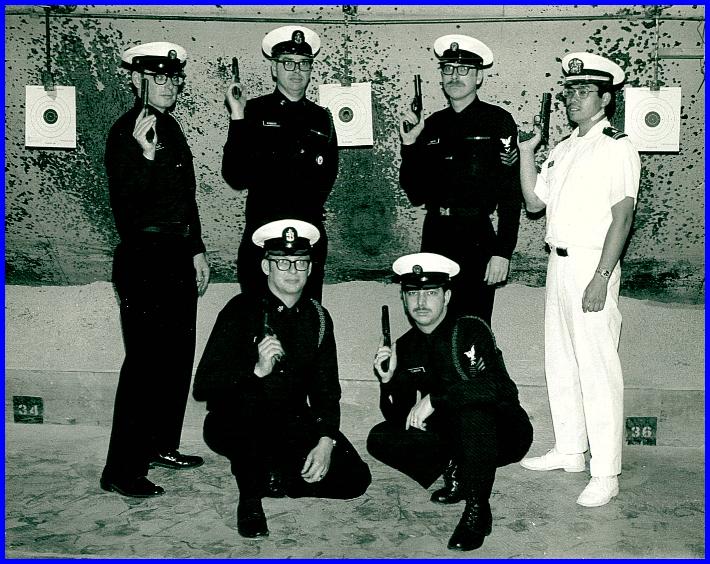
    OS1 Edward Lockerd OS1 Edward Lockerd ENC John Gunsett ENC John Gunsett YN1 Danny Martin YN1 Danny Martin Lt. Norman Wong Lt. Norman Wong OMC Bryce Welluitz OMC Bryce Welluitz FTG1 Mike Flannagan FTG1 Mike Flannagan
    1977 Recruit Training Center Pistol Team 
Commanders Cup Champions 
Great Lakes Naval Base